

TRANSPORTATION
Transportation accounts for approximately 55 percent of Hawai‘i’s total energy use, driven largely by aviation and ground transportation. Reducing petroleum dependence in the transportation sector is central to Hawai‘i’s long-term energy planning and economic resilience. Achieving this will require both (1) transitioning away from petroleum-fueled vehicles and (2) improving system efficiency by reducing total transportation energy demand. As transportation electrification expands, electricity demand is expected to increase, requiring coordinated planning across the energy and transportation systems.
HSEO’s transportation initiatives are guided by Chapter 196, Hawai‘i Revised Statutes, which establishes the Office’s responsibility to promote energy efficiency, renewable energy, and clean transportation.
Main Sectors – Page Sections
Energy Use Data for Transportation and Other Sectors in Hawai’i
GROUND TRANSPORTATION
Efforts to advance clean transportation in the ground sector generally fall into two categories:
- Reduce transportation energy demand (e.g., transit, walking, bicycling, shared mobility, and trip reduction); and
- Transition to zero-emission vehicles (ZEVs), including supporting charging infrastructure.
The Hawai‘i State Energy Office (HSEO) supports these efforts by administering incentive and grant programs, conducting energy analysis and planning, and coordinating with state agencies, counties, utilities, private industry, and community partners.
HSEO’s work in this area focuses on expanding electric vehicle (EV) adoption and improving access to multimodal transportation options such as public transit, walking, and bicycling. Learn more about HSEO's work in these areas below.
Electric Vehicle (EV) & EV Charging
Electric Vehicles (EV)
HSEO supports the adoption of electric vehicles as part of Hawai‘i’s broader efforts to reduce petroleum dependence and transportation-related emissions, and strengthen energy security. EVs are significantly more energy-efficient per mile than conventional gasoline vehicles, which can reduce total energy demand for mobility. Through funding programs, analysis, technical assistance, and coordination with public and private partners, HSEO helps address barriers to EV adoption and supports long-term transportation electrification planning.
To learn more about EV programs and initiatives, click the button below to visit the EV page.
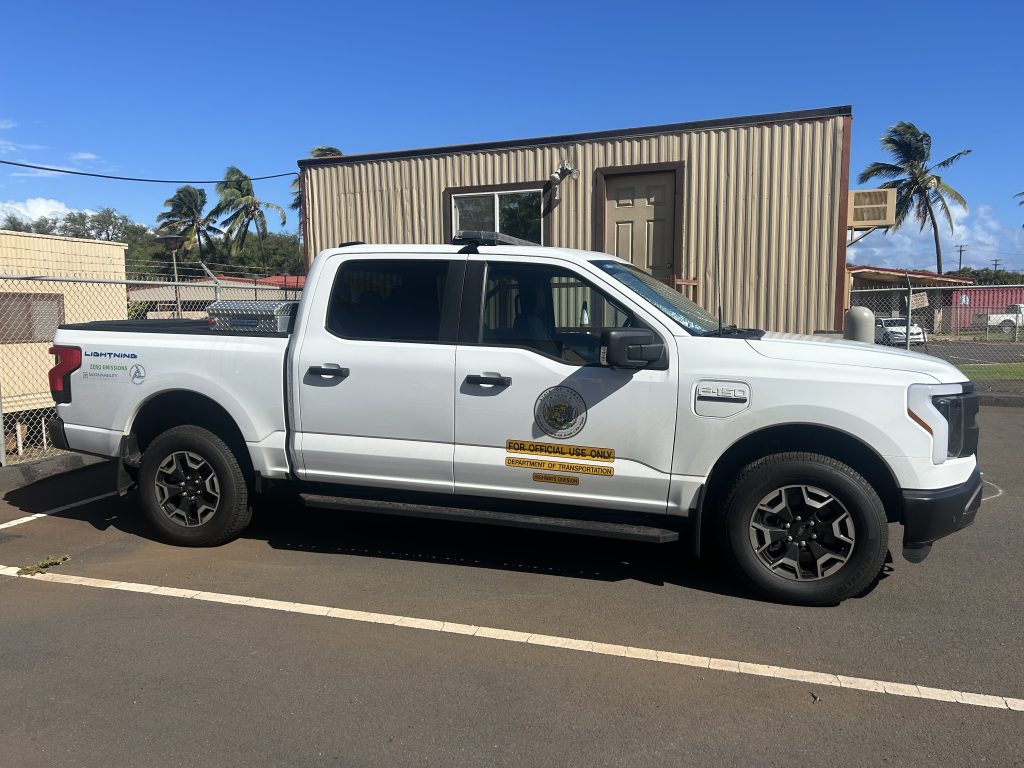
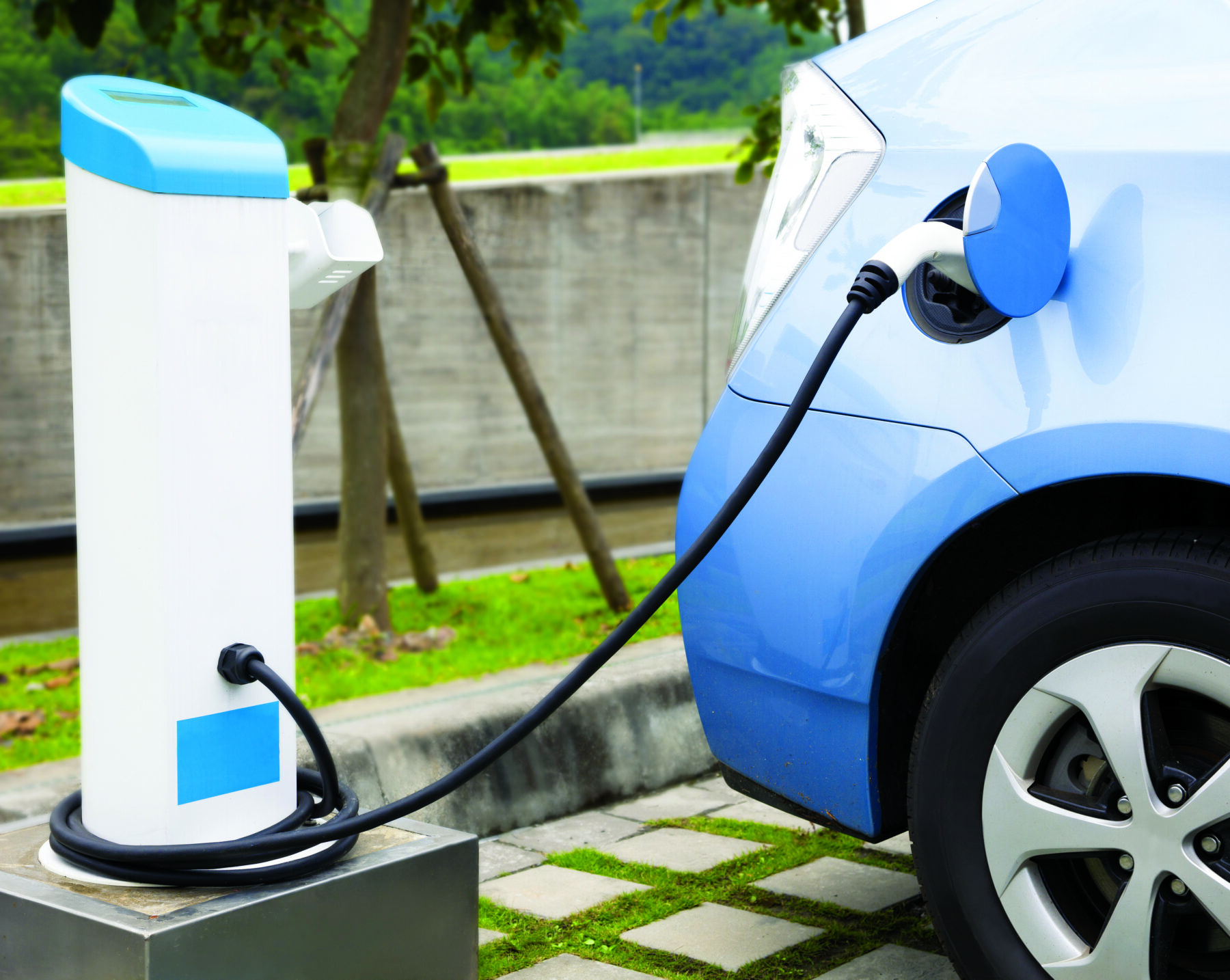
EV Charging
Expanding access to reliable charging infrastructure is critical to supporting EV adoption statewide. HSEO administers funding programs and works with public and private partners to support the development of EV charging infrastructure across Hawai‘i.
To learn more about how the state is working to advance the development of EV charging infrastructure, click the button below to visit the EV Charging page.
State Fleet Electrification
Statutory Requirements – State Fleets
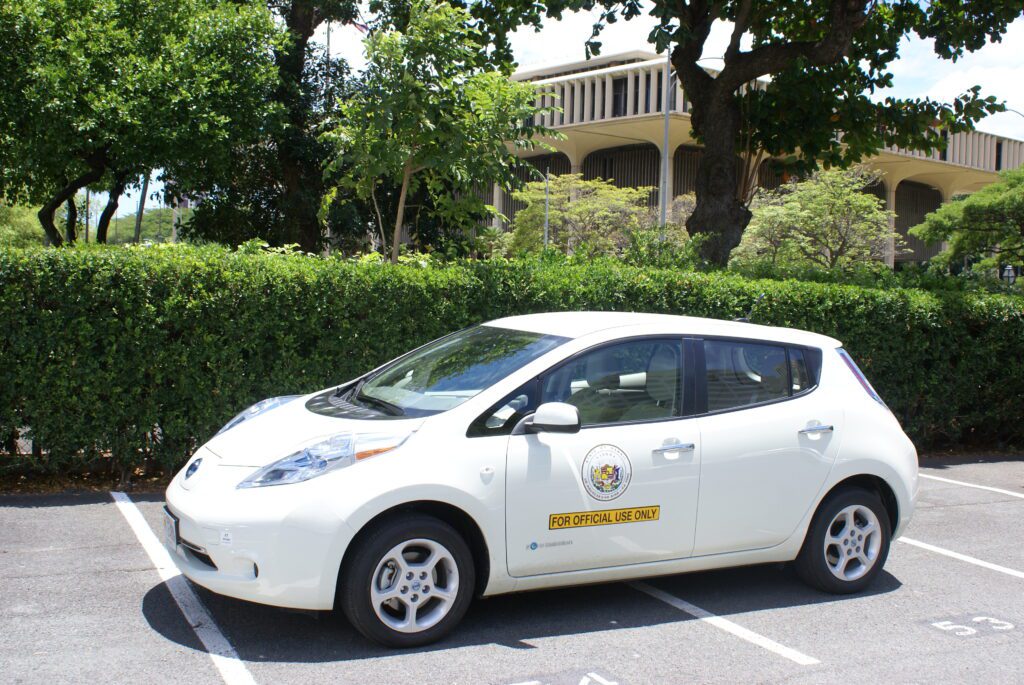
Act 74 SLH 2021 has amended the procurement policies for the State Government fleets:
A) starting January 1, 2022, all new light-duty motor vehicles that are passenger cars purchased for the State’s fleet are required to be zero-emission vehicles;
B) effective no later than January 1, 2030, all new purchases of light-duty multipurpose passenger vehicles and trucks for the State’s fleet must also be zero-emission vehicles.
Where procurement of a zero-emission vehicle would result in hindered operations of the agency, the agency may submit an exemption request.
Multi-Modal Transportation
Active Transportation & Mobility in Ground Transportation
Reducing overall transportation energy demand complements vehicle electrification and helps limit long-term fuel and infrastructure needs. Multimodal strategies, including public transit, walking, bicycling, and shared mobility, can reduce reliance on single-occupancy vehicle trips and help manage growth in vehicle miles traveled (VMT), a measure of the total number of miles driven by vehicles within a given area over a period of time.
Recent trends indicate that total VMT has increased largely due to growth in the number of vehicles, rather than increases in miles traveled per vehicle.
HSEO supports multimodal transportation through research and analysis that inform energy planning. HSEO conducts studies related to transportation demand, participates in pilot programs such as hybrid telework initiatives, and provides data-driven input on policy measures that may reduce transportation energy use.
Other Benefits of Increasing Multimodal Transportation
(Expanding Transportation Choices):
In addition to climate and energy benefits, expanding transportation choices also has the following benefits:
- Increased right of way for other uses: agriculture, affordable housing, green space, etc.
- Reduced vehicle emissions and air pollution.
- Increased livable and walkable communities.
- Increased opportunities for active living -> increased health
- Reduced traffic fatalities, hospitalizations, and crashes.
- Reduced transportation costs.
- Reduced deferred public maintenance costs.
- Reduced stormwater runoff.
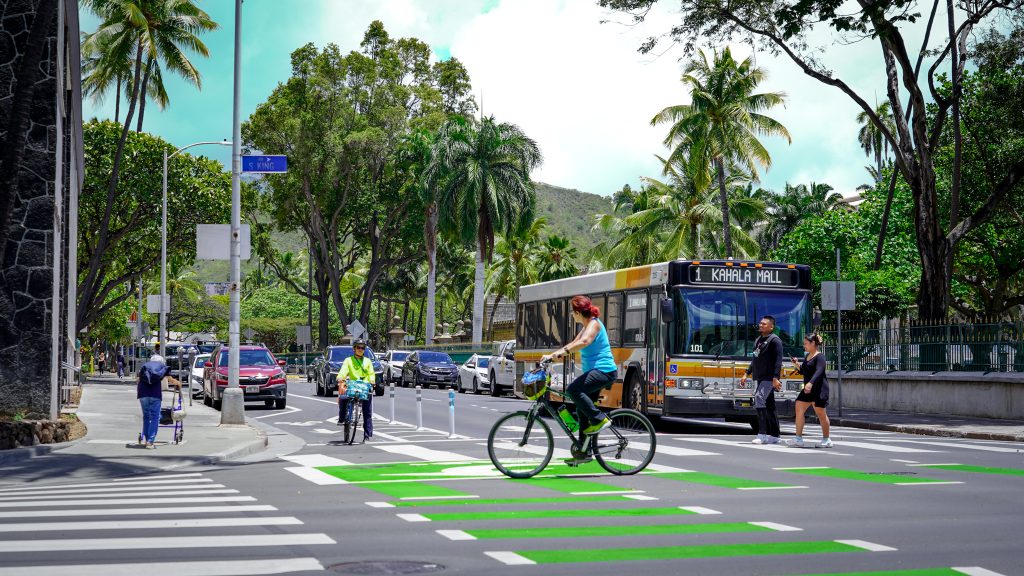
Photo: Courtesy of Department of Transit Services, City and County of Honolulu
MARITIME TRANSPORTATION
Maritime Transportation
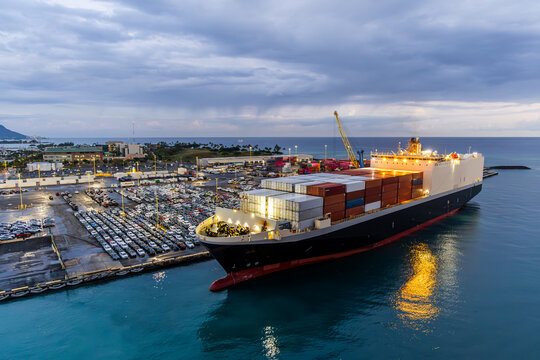
Marine transportation plays a critical role in Hawai‘i’s economy and energy system. Due to the State’s geographic location, the majority of goods consumed in Hawai‘i arrive by ship, including fuel, food, construction materials, and other essential commodities.
Marine fuel use contributes to the transportation sector’s overall petroleum consumption. Emissions from domestic marine travel are included in the State’s greenhouse gas inventory, while international bunker fuel emissions are reported separately in accordance with international accounting standards.
Approaches to reducing petroleum use in marine transportation must consider operational feasibility, cost impacts, and the broader federal and international regulatory framework that governs shipping. The Hawai‘i State Energy Office (HSEO) monitors marine transportation energy trends and participates in interagency coordination to ensure that marine energy considerations are reflected in statewide energy planning.
AIR TRANSPORTATION

Aviation
Aviation is essential to Hawai‘i’s economy and connectivity, providing interisland service and long-haul travel between the islands and destinations across the continental U.S. and around the world. Most long-haul flights cannot be electrified with currently available technology, so near-term approaches focus on operational efficiency and lower-petroleum fuel pathways where feasible, in coordination with industry partners.
Battery-electric propulsion applied to larger aircraft remains limited by current energy-density and aircraft certification constraints, and fully electric solutions are not yet available even for shorter interisland routes.
Emerging technologies, such as electric wing-in-ground-effect vehicles (sometimes called seagliders), are being developed for high-speed regional travel over water and could offer a future alternative for certain short inter-island routes. These vehicles are designed to operate in a ground-effect mode over water and are powered by electric propulsion, but they remain in prototype testing and are not yet approved for commercial service. Ongoing development and certification efforts will determine whether such technologies could become viable options for Hawai‘i in the future.