
HAWAIʻI STATE ENERGY OFFICE TO SUPPORT COMMUNITY RESILIENCE PROJECTS IN HAWAIʻI AND AMERICAN SAMOA

In April 2025, the Hawaiʻi State Energy Office (HSEO) became the Pacific Regional Partner for the U.S. Department of Energy’s Energy Technology Innovation Partnership Project (ETIPP), which pairs local communities with national laboratories to tackle local energy challenges through planning and deep-dive technical projects. Now welcoming its fifth cohort, the program has supported more than 80 communities in eight regions across the United States and its territories with projects that include strategic energy planning, energy generation and storage assessments, weatherization, energy system optimization modeling and other in-depth energy analysis projects.

In 2026, HSEO will support the launch of five new ETIPP projects in Hawaiʻi and American Samoa to strengthen energy reliability and security.

  • American Samoa, including Tutuila and Manua Islands

The American Samoa Department of Homeland Security seeks support to reduce downtime and maintain the capabilities of critical emergency operations centers and communication towers during natural disaster events. ETIPP will help the department analyze outage frequency, evaluate on-site energy generation and storage options, and provide guidance for integrating on-site generation with existing generators to provide redundancy, reliability and security during outages.

  • Hawaiʻi County

Reliable power is essential for the county of Hawai‘i’s Department of Water Supply’s provision of potable water. The department seeks paths to energy reliability that will strengthen the county’s water security. ETIPP will help the county analyze the energy use and vulnerabilities of its drinking water system and assess cost-effective solutions to improve its reliability, security and efficiency.

  • Hauʻula and Punaluʻu

Hau‘ula and Punalu‘u are geographically isolated, meaning that outages are frequent, as power travels long distances to reach the communities through lines that are vulnerable to environmental damage. ETIPP will support Hau‘ula and Punalu‘u in evaluating the feasibility and capacity of on-site energy generation at key facilities to improve the reliability and security of their isolated power system and ensure that critical services continue for community members during outages.

  • Wahiawā and Whitmore Villages

Wahiawā and Whitmore villages are communities on Oʻahu interested in identifying local, cost-effective energy generation and storage options to reduce costs, including from hydropower and pumped hydropower storage. ETIPP technical assistance will provide hydrologic resource modeling, conceptual microgrid designs and implementation strategies to improve the reliability and security of Wahiawā and Whitmore’s energy systems.

  • Wai‘anae

Through ETIPP, Waiʻanae developed a strategic energy plan to identify potential solutions to support residents during emergencies and improve the reliability and affordability of their energy system. The program will continue supporting Wai‘anae’s goals for community-level reliability by evaluating potential resilience hub locations, microgrid potential and generation options.

Technical assistance from ETIPP helps communities proactively identify and implement solutions that suit their particular needs, leveraging the experience and expertise of a broad coalition of local stakeholders, regional organizations, national laboratories and the Department of Energy.

“Working with communities to enable strategic investments in energy planning and community resilience is fundamentally important to our ability to sustain a reliable, affordable, and environmentally sound energy ecosystem,” said Mark Glick, chief energy officer for the state. “All sectors of Hawai’i’s economy and well-being depend on it.”

HSEO has already supported nine communities in Hawaiʻi and the Pacific Region through ETIPP’s first four cohorts and will continue working closely with local governments and community-based organizations to develop energy solutions that address specific geographic, cultural and economic needs in Hawaiʻi and the Pacific region.

Ongoing ETIPP projects across the state include technical analysis of floating PV and pumped hydro projects on Moloka‘i, microgrids on O‘ahu, and resilience hubs on Hawaiian Homesteads on Maui.

About ETIPP

ETIPP is a community-led technical support program for coastal, remote, and island communities to access unique solutions and increase energy resilience. By uniting federal agencies, national laboratories, regional organizations, and community stakeholders, ETIPP provides tailored technical support to help communities achieve affordable, reliable solutions to their energy system challenges. This collaborative model leverages the combined expertise and resources of its partners to deliver comprehensive, practical solutions that align with local needs. Learn more about ETIPP.
STATE OF HAWAI‘I LAUNCHES TRAINING FOR RESIDENTIAL ENERGY CONTRACTORS TO BUILD LOCAL ENERGY WORKFORCE

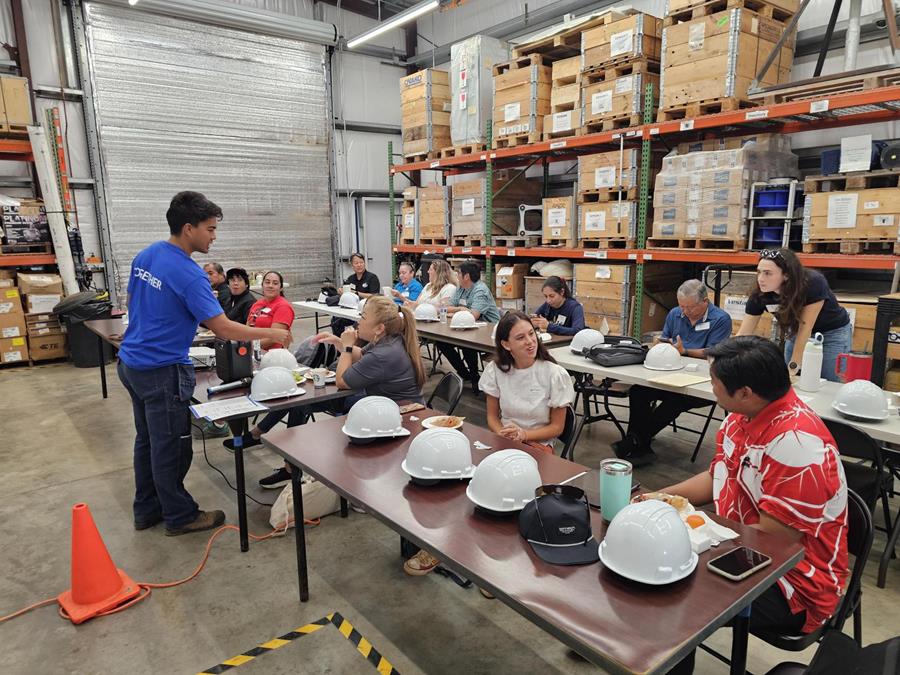
HONOLULU — The Hawai‘i State Energy Office (HSEO) will launch a new Training for Residential Energy Contractors (TREC) program in January 2026 as a statewide initiative designed to grow Hawai‘i’s energy contractor workforce and prepare local professionals to deliver home energy upgrades under the state’s Home Energy Rebates program. The TREC program will provide hands-on training and nationally recognized certifications for contractors, builders and tradespeople across Hawai‘i, ensuring that the state’s workforce is ready to meet rising demand for home energy retrofits and electrification projects.


To carry out the training, HSEO has partnered with Hā Sustainability (a Hawai‘i-based sustainability consultancy focused on community and workforce development), Everblue (a national training provider) and Hui o Hau‘ula (a community-based organization supporting workforce and economic development in rural O‘ahu.)

“The TREC contractor training program is the backbone of Hawai‘i’s clean energy future powered by local expertise,” said Cameron Black, Managing Director, Jobs and Outreach Branch of the Hawai‘i State Energy Office. “This program has two major objectives: it creates opportunities for our local contractor base to expand their skills and credentials, and it ensures that a highly trained local workforce is installing energy efficiency retrofits and upgrades that save money for households throughout Hawai‘i.”

“TREC is about empowering Hawai‘i’s local workforce to lead the clean energy transition,” added Hannah Shipman-Peila, co-founder of Hā Sustainability. “By equipping contractors with nationally recognized certifications and hands-on training, we’re ensuring that home energy upgrades are delivered by the very people who call these islands home.”

Training Opportunities


Through partnerships with training provider Everblue and the Building Performance Institute (BPI), TREC will offer a range of industry-recognized courses beginning in early 2026:

  • BPI Building Science Principles Certification: Covers the house-as-a-system
    concept, heat and insulation, air sealing, moisture control and building science
    fundamentals to improve home performance, health and efficiency.
  • BPI Building Analyst Technician (BA-T): Focuses on diagnostic testing, data
    gathering, combustion safety, blower door testing and energy auditing. It prepares
    trainees for BPI BA-T certification.
  • BPI Building Analyst Professional (BA-P): Advanced training in home energy auditing
    using modeling software to identify performance issues and recommend energy
    efficiency improvements.
  • Everblue Heat Pump Installation: Training in installation, commissioning, servicing and
    troubleshooting of heat pump systems, with emphasis on A/C and heat pump
    configurations, electrical safety and maintenance.
  • ENERGY STAR Appliance Certification: Certification for inspection of energy-efficient
    appliances to meet ENERGY STAR standards, aligned with HEAR rebate requirements.
  • ENERGY STAR Homes Certification: Training for certifying and inspecting homes that
    meet ENERGY STAR efficiency standards.
  • Multi-Family Energy Auditor: Prepares professionals to perform energy audits for
    multi-family buildings and earn the Multifamily Energy Auditor Certification.

About TREC
Funding for the TREC program, officially known as the State-Based Home Energy Efficiency Contractor Training Grants, includes $200 million allocated by the U.S. Department of Energy under the Inflation Reduction Act. The funding is designed to help states and territories lower the costs associated with training, testing, and certifying contractors in residential energy efficiency and electrification. Hawaiʻi’s allocation of $1,194,820 is administered by the Hawai‘i State Energy Office in support of the state’s
mission to reduce electricity costs for residents, enhance home comfort and help Hawai‘i achieve its goal of 100% renewable energy by 2045.


Get Involved


Contractors, electricians, HVAC professionals and other tradespeople are encouraged to learn more and register for training opportunities starting in January 2026 at
https://energy.hawaii.gov/trec-energy-training-program/
For more information, please contact (800) 657-3044.

JERA AND STATE OF HAWAI’I SIGN STRATEGIC PARTNERING AGREEMENT TO ADVANCE ENERGY TRANSITION

TOKYO – Oct. 14, 2025 – JERA Co., Inc. (“JERA”), Japan’s largest power producer, today announced the signing of a Strategic Partnering Agreement (“SPA”) with the Office of the Governor of the State of Hawai‘i (“the State”) to support Hawai‘i’s decarbonization goals and energy transition.

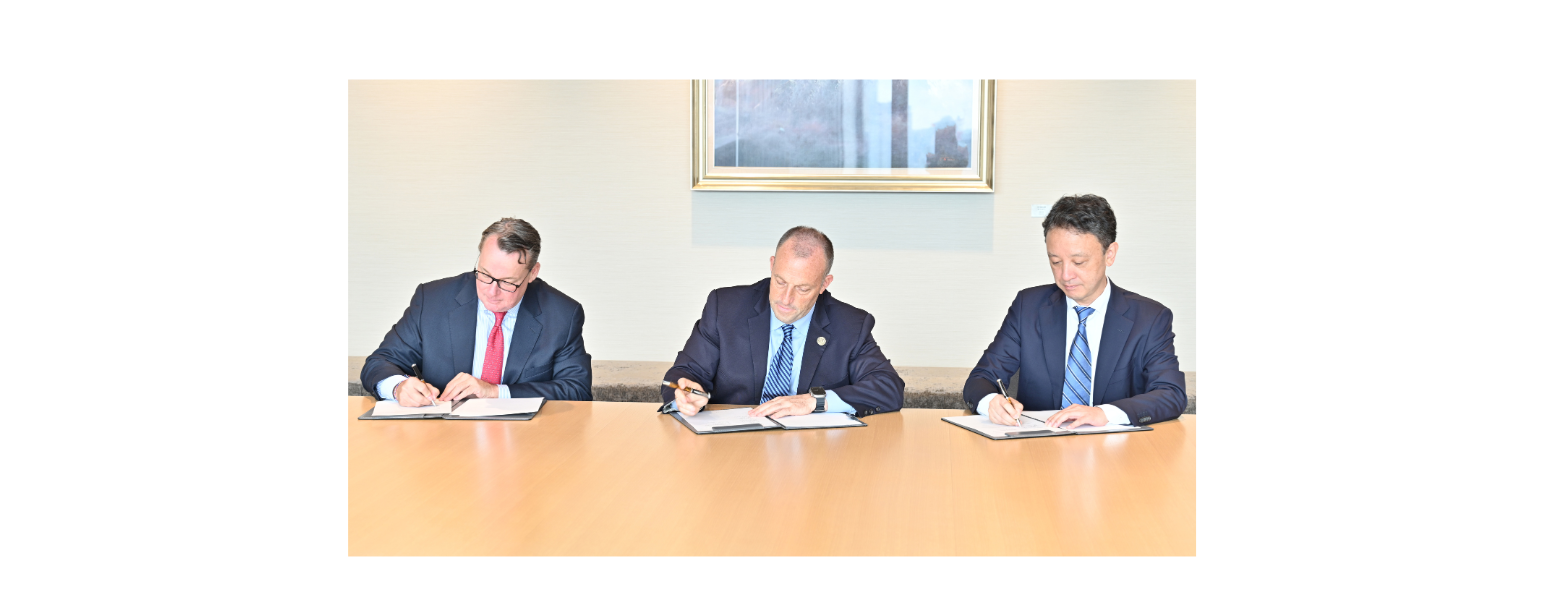
The SPA was signed on October 6, 2025, at JERA’s Tokyo headquarters by Governor Josh Green, and JERA Global CEO Yukio Kani, marking a new step in Hawai‘i–Japan collaboration on energy partnership and future-oriented development. The agreement establishes a framework for long-term collaboration among JERA Co., Inc., its U.S. subsidiary JERA Americas Inc., and the State of Hawai‘i focusing on fuel diversity and developing pathways toward decarbonization.

This partnership is designed to help realize the Hawai‘i State Energy Office’s Alternative Fuels, Repowering and Energy Transition Study, published in January 2025, which concluded in the short term that the state should accelerate its shift away from oil by using affordable and reliable alternative fuels, including natural gas. Governor Josh Green said,“The State of Hawai‘i is committed to achieving a cleaner, more sustainable energy future for our people. By collaborating with JERA—Japan’s largest power producer and a recognized global leader in energy transition—we are gaining access to valuable expertise and experience that will help accelerate our decarbonization journey while improving reliability and affordability for our residents.”

Yukio Kani, Global CEO of JERA Co., Inc., said,“JERA is honored to partner with the State of Hawai‘i in advancing its energy transition goals. As island communities, Japan and Hawai‘i share similar challenges and opportunities in pursuing affordability, stability, and sustainability. By working together, we aim to develop practical, innovative solutions that strengthen energy resilience and reduce costs for the people of Hawai‘i.”

JERA, brings extensive experience in the development and operation of large-scale, reliable energy infrastructure worldwide, with a growing focus on low carbon fuels, hydrogen, ammonia, and renewable energy integration. The company has committed to achieving net-zero CO₂ emissions from its domestic and international operations by 2050, as part of its mission to provide cutting edge solutions to the worlds’ energy challenges and ensure a sustainable and stable global energy supply.

About JERA

JERA is a global energy leader and Japan’s largest power generation company focused on providing cutting-edge solutions to the world’s energy issues. Established in 2015, the Company produces one-third of Japan’s electricity, and is one of the largest LNG buyers in the world. JERA has global reach and strength throughout the energy supply chain, from participation in LNG upstream projects and fuel procurement, through fuel transportation to power generation. In support of a responsible energy transition, JERA has committed to achieving net-zero CO₂ emissions from its domestic and overseas businesses by 2050.

GOVERNOR GREEN STRENGTHENS HAWAI‘I–JAPAN RELATIONS,SIGNS CLEAN ENERGY MEMORANDA

HONOLULU – Governor Josh Green today concluded a weeklong visit to Japan, where he and First Lady Jaime Kanani Green led a Hawai‘i delegation through Tokyo, Osaka and Okinawa, to strengthen partnerships in clean energy, business development, education and culture.

In Tokyo, Governor Green met with senior leaders from NEC Corporation, JERA Co. Inc. and the Yomiuri Shimbun Group, to explore opportunities in technology, energy and tourism. He also visited Expo 2025 Osaka, where Hawai‘i was recognized during a United States Pavilion event, hosted by Ambassador William E. Grayson, celebrating America’s 250th anniversary and the enduring friendship between Japan and the United States. Governor Green met with officials from Japan, France and the U.S. Pavillion, including U.S. Ambassador to Japan George Glass.

A Strategic Partnering Agreement signed by Governor Green on October 6 establishes a framework for collaboration among JERA Co., Inc., JERA Americas Inc. and the state of Hawaiʻi. The agreement will support the state’s decarbonization goals, advancing clean energy initiatives recommended in the Alternative Fuels, Repowering and Energy Transition study published by the Hawaiʻi State Energy Office in January 2025. 

JERA, the largest power producer in Japan and one of the largest power producers globally, has committed to eliminating carbon dioxide (CO2) emissions from domestic and international operations by 2050. JERA brings unparalleled expertise in energy infrastructure and strategic investment, in addition to its growing emphasis on low- and zero-carbon energy development. These efforts are part of Hawaiʻi’s strategy to diversify its energy portfolio.

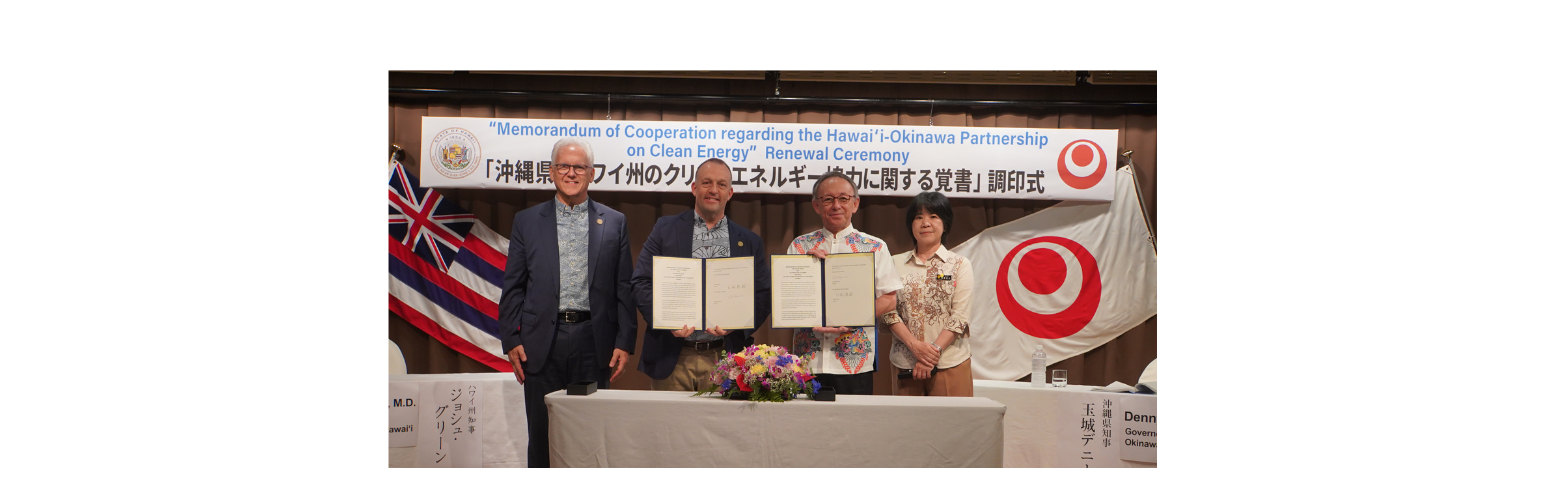
In Okinawa, Governor Green and Okinawa Governor Denny Tamaki signed a Five-Year Memorandum of Cooperation on Clean Energy, renewing a partnership that began in 2010 between the Hawai‘i State Energy Office and the Okinawa Prefectural Government. The agreement advances shared goals for renewable energy, clean transportation and grid innovation across island communities.

“Hawai‘i and Okinawa share more than history, we share purpose,” said Governor Green. “Together, we’re proving that island communities can lead the world in clean energy and resilience, while honoring the cultural ties that bind us.”

The visit also marked two major milestones: the 40th anniversary of the Hawai‘i–Okinawa sister-state relationship and the 125th anniversary of Okinawan immigration to Hawai‘i. These historic connections continue to shape the social, cultural and economic fabric of both island communities, deepening bonds built on shared values of aloha, family and perseverance.

Governor Green was joined by state legislators and business leaders, including Senate President Ronald Kouchi, Vice Speaker Linda Ichiyama, Senators Glenn Wakai, Chris Lee, and Michelle Kidani, Representatives Gregg Takayama, Dee Morikawa and Kyle Yamashita, as well as Department of Business, Economic Development and Tourism Director James Kunane Tokioka and Hawai‘i State Energy Office Director Mark Glick.

“Japan remains one of Hawai‘i’s most important partners — in energy, commerce, education and people-to-people exchange,” said Governor Green. “This mission reaffirms our shared commitment to innovation, sustainability and friendship that extends far beyond the Pacific.”

Governor Green will return to Honolulu on October 15 following a stop in San Francisco, where he will speak at the Salesforce Dreamforce Conference.

Photos, courtesy Office of the Governor, can be found here.


HAWAI‘I JOINS U.S. AFFORDABLE CLEAN CARS COALITION 

HONOLULU —The state of Hawaiʻi has joined the Affordable Clean Cars Coalition — a growing partnership among the states to help sustain America’s transition to cleaner and more affordable cars, support U.S. automotive manufacturers and workers, and safeguard states’ clean air authority.

Governor Green joined 12 other governors who launched the coalition earlier this year. “Hawaiʻi is committed to a clean energy future that protects the health of our people,” he said. “By investing in electrification, we can put more electric vehicles on the road and give our families more choices and lower costs, while safeguarding our communities from harmful pollution.”

The effort is one of several multistate partnerships hosted by the U.S. Climate Alliance, which launched a nationwide effort last month to encourage Americans to take advantage of federal clean energy incentives — including thousands of dollars in tax credits for EVs and EV charger installations — before they expire.

>