HSEO Issue Brief: Review of the Hartley/Roberts Report on Hawaiʻi’s Electricity Future

Note: This report, titled Hawaiʻi’s Electricity Future: Three Findings on Solar Reform, Enhanced Geothermal and the JERA LNG Proposal and published by the University of Hawaii Economic Research Association (UHERO), has been temporarily withdrawn by the paper’s lead author and will be reclassified as a working paper. This Issue Brief does not comment on the geothermal or jobs sections of the Hartley/Roberts report. 

The Hartley/Roberts report should not be relied upon as a basis for major electricity-system planning decisions for Oʻahu. Although the report presents a capacity-expansion analysis of Hawaiʻi’s electricity future, its conclusions are not supported by the level of reliability, land-use, emissions, transmission, distribution, operational, and community-feasibility analysis required for an isolated island grid. 

Hawaiʻi must accelerate clean energy deployment, including distributed solar and storage, responsibly sited utility-scale solar and storage, and energy efficiency, demand response, and other clean resources. However, the Hartley/Roberts report reaches broad conclusions that are not adequately supported by the analysis presented. In particular, the report overstates what capacity-expansion modeling can prove without corresponding resource adequacy, production cost, transmission, distribution, land use, interconnection, and system security analysis. 

I. Executive Summary

The report’s most serious flaws are: 

1. The land-use assumption is unrealistic. The report’s centerpiece assumption of installing more than 5,000 MW of utility-scale solar across Oʻahu is not a minor modeling assumption; it would represent a massive land-use transformation of the island. 

2. The reliability analysis is inadequate. The report relies on a limited set of sample days and does not fully test multi-day renewable droughts, storm conditions, generator outages, transmission contingencies, distribution constraints, or other emergency conditions that are central to island-grid reliability 

3. The counterfactual is flawed. The report appears to treat JERA LNG as an additive to HECO’s proposed Waiau Repower in key scenarios, rather than fully testing whether JERA could replace Waiau Repower, reduce or eliminate reliance on the Kahe and Waiau power plants, or accelerate retirement or allow fuel switching for older LSFO-burning units.

4. The report underplays the problem of continued reliance on HECO’s existing firm fleet. A “no new thermal” case that depends on aging, inefficient, LSFO-burning units is not necessarily cleaner, cheaper, or more reliable in practice. 

5. Major emissions claims are insufficiently supported. The report makes significant claims about emissions impacts without providing sufficient transparent dispatch, fuel, heat-rate, lifecycle-emissions, and retirement assumptions. 

6. The report overstates what wheeling and soft-cost reform can solve. A PUC wheeling decision will not, by itself, resolve landowner willingness, permitting, community opposition, interconnection studies, project financing, litigation risk, or utility-scale RFP design. 

7. The report does not adequately address distributed energy resources as a central alternative. A more equitable and resilient pathway should place greater emphasis on rooftop solar, parking canopy solar, distributed batteries, demand response, grid-interactive loads, community solar, virtual power plants, conservation, energy efficiency, and rate design. 

The report’s conclusions regarding “no new combined-cycle beyond Puʻuloa,” rejection of JERA LNG, and feasibility of a massive utility-scale solar buildout are not sufficiently supported by transparent assumptions and modeling, reliability studies, land-use analysis, dispatch data, and independent validation. 

II. Land Use: The Central Solar Assumption Is Deeply Flawed 

The Hartley/Roberts report’s centerpiece assumption of installing 5,243 MW of utility-scale solar on 31,500 acres on Oʻahu is deeply flawed and raises questions about the feasibility, realism, and validity of the analysis. Merely identifying land as “developable” does not make it socially, environmentally, culturally, or politically available for utility-scale energy development. 

Screened acreage is not the same as developable acreage. After landowner willingness, agricultural policy, cultural resources, habitat, drainage, slope, access roads, interconnection, substations, community acceptance, litigation risk, and permitting are accounted for, the usable acreage could be much lower. The Hartley/Roberts report appears to treat the hardest constraint in Hawaiʻi as though it were a secondary implementation issue. 

Land use is not a minor implementation detail in Hawaiʻi; it is often the central constraint. Oʻahu has limited land, competing needs for agriculture, housing, conservation, cultural resources, watershed protection, and community priorities, and a long history of uneven siting burdens. Any serious clean energy pathway needs to account for those realities. 

The cancelled 15 MW Paeahu Solar project in South Maui illustrates that even much smaller solar-plus-storage projects can face serious siting, community, litigation, and implementation risks. Paeahu Solar was proposed with a 60 MWh battery system on approximately 200 acres leased from ʻUlupalakua Ranch and was expected to serve approximately 6,900 Maui households, but Hawaiian Electric and Innergex ultimately cancelled the project after lengthy delays due to legal challenges and sustained opposition from some residents. 

Community opposition is not unusual for large land-intensive renewable energy projects in Hawaiʻi, particularly where projects affect open space, agricultural lands, cultural resources, view planes, drainage, wildlife concerns, or communities that already feel overburdened by infrastructure siting. The proposal discussed in the Hartley/Roberts report would require utility-scale solar development on a vastly larger scale — more than 5,000 MW across 31,500 acres on Oʻahu — across essentially every area the authors identify as suitable for solar parcels, including Waiʻanae, the Central Plain, ʻEwa, windward Oʻahu, and other parts of the island that appear, based on the report’s maps, to include certain beach parks, stream beds, and densely forested areas deep in the island’s valleys. 

Consider that Oʻahu currently has about 357 MW of utility-scale solar compared with 2,984 MW of total installed capacity. Scaling to more than 5,000 MW of utility-scale solar would represent an enormous land-use transformation, not simply a technical substitution for fossil generation. Hawaiʻi’s energy strategy recognizes and embraces the essential role for more solar, but it must transparently address the land-intensive nature of utility-scale solar, especially on Oʻahu. 

The Hartley/Roberts report should also clarify whether the acreage calculation is based on MWdc or MWac. DC:AC ratio, fixed-tilt versus tracking design, capacity density, MWh output per acre, and interconnection capacity all materially affect the land requirement. A mismatch between MWac modeling and MWdc land-density assumptions could materially understate acreage. 

III. Flawed Assumptions and Methods 

A. Capacity expansion is not a substitute for integrated resource planning. 

The Hartley/Roberts report overstates what its modeling can prove. Capacity-expansion modeling can identify potentially lower-cost portfolios under a defined set of assumptions. It cannot, standing alone, prove that a high-renewable island grid can operate reliably under real-world conditions. 

For Oʻahu, the relevant question is not merely which resource mix minimizes modeled system cost. The question is whether the portfolio can maintain service during multi-day cloudy and low-wind periods, generator outages, transmission failures, distribution constraints, storm recovery, and emergency conditions. 

Oʻahu cannot lean on neighboring balancing areas. Frequency response, contingency response, ramping, minimum generation, grid-forming capability, black start, storm recovery, and multi-day low-renewable events matter more than they do in large, interconnected electricity systems such as those on the continent. 

The Hartley/Roberts reliability analysis is too narrow. It relies on a limited set of sample days and does not fully test week-long renewable droughts, storm conditions, fuel-supply disruptions, generator outages, or major transmission contingencies. That limitation goes directly to whether the report’s “no new combined-cycle beyond Puʻuloa” conclusion is valid. 

B. The report does not adequately evaluate reliability and resilience. 

Another flaw is that reliability and resilience are not adequately evaluated in the Hartley/Roberts analysis. Oʻahu absolutely needs to accelerate clean energy deployment, including stronger policy and rate incentives for distributed solar, storage, demand response, and responsibly sited utility-scale solar. But the grid also needs resources that can maintain service during prolonged cloudy weather, storms, transmission or distribution outages, and other emergency conditions. 

A clean energy transition that relies heavily on variable solar generation must still address the need for firm, flexible, and resilient resources that can support the system when solar output is low for extended periods. The Hartley/Roberts report does not sufficiently address the need for firm, flexible capacity during extended low-renewable periods, including periods when solar and wind output may be low for multiple consecutive days. Prior technical work by General Electric, HNEI, Hawaiian Electric, and others has emphasized that these conditions are material to Hawaiʻi grid planning. 

The report does not fully test multi-day climate stress, transmission constraints, local siting constraints, or detailed distribution hosting capacity. For Oʻahu, those are not academic sensitivities. They are core planning requirements. 

C. The report uses the wrong counterfactual. 

The Hartley/Roberts report appears to treat JERA LNG as an added resource layered on top of Waiau Repower in key scenarios. That is not the intent of the JERA plan. Relevant scenarios would test whether JERA’s 500 MW high-efficiency power plant fully replaces Waiau Repower, reduces reliance on or eliminates Kahe and Waiau power plants entirely, supports retirement of older LSFO units, and changes the timing and cost of firm-resource needs identified in Hawaiian Electric’s Integrated Grid Plan. 

If the “no new combined-cycle” case depends on continued availability of old, inefficient thermal units with known maintenance, outage, minimum-load, and reliability constraints, then it may understate both cost and reliability risk. A proper integrated resource plan comparison should clearly show what units retire, what units remain available, what new resources are added, and how each portfolio meets reliability criteria. 

This is a fundamental flaw. The Hartley/Roberts report strongly criticizes LNG as unnecessary, but its alternative may depend on preserving the existing LSFO fleet as a reliability backstop. That is not a clean or risk-free counterfactual. 

D. The report underplays continued reliance on LSFO and HECO’s aging firm fleet. 

The Hartley/Roberts “no new combined-cycle” case is not the same thing as a no-fossil or low-risk firm-capacity pathway. It appears to rely on HECO’s existing firm units remaining available in the background while solar and batteries expand. That matters because existing LSFO-burning units are aging, relatively inefficient, emissions-intensive, and subject to maintenance, outage, minimum-load, and operational constraints. 

A planning analysis should not treat existing thermal capacity as a free or uncomplicated reliability bridge. It should disclose, by unit, the assumed retirement dates, availability, outage rates, heat rates, minimum generation levels, ramp rates, maintenance costs, fuel costs, emissions rates, and operating constraints. It should also test whether continued reliance on those units is consistent with reliability, emissions, cost, and statutory clean-energy objectives. 

The Hartley/Roberts critique of LNG is incomplete unless it also confronts the weaknesses of the alternative on which it relies: continued use of LSFO-fired generation and existing firm resources. An outcome that avoids new thermal investment but keeps old LSFO units available for reliability may look cheaper in a model while shifting risk to reliability, maintenance, emissions, and emergency operations. 

E. The report relies on incorrect assumptions about JERA’s cost and payback structure. 

The Hartley/Roberts report appears to rely on incorrect or insufficiently documented assumptions regarding JERA’s cost and payback structure. Based on information currently available to HSEO, the JERA capital cost is understood to be approximately $2 billion with the power plant and gas import facilities included, not $2.4 billion plus additional LNG import facilities. The Hartley/Roberts report should clearly document the cost basis it used. If the report assumes $2.4 billion plus separate LNG import facilities, that could represent roughly a 30 percent overestimation and would materially bias the result against JERA. 

The JERA 500 MW + LNG plan also should not be characterized as a 20-year payback for the entire infrastructure. The LNG-associated infrastructure appears to have a less-than-five-year payback, while the 20-year horizon applies to the majority of the plan — the 500 MW high-efficiency power plant — that could restore long-term system reliability to Oʻahu and may be capable of running on biodiesel, renewable natural gas, or hydrogen to meet Hawaiʻi’s RPS law. 

The Hartley/Roberts report should not make definitive claims about JERA’s economics unless the capital-cost stack, ownership structure, cost recovery, fuel contract, payback assumptions, and fuel-flexibility assumptions are clearly disclosed and tested. 

F. Outdated Solar Procurement Data May Undermine the Report’s Cost Conclusions 

The report’s total system cost results are highly sensitive to assumed solar and battery costs, which is a critical limitation given the central role those assumptions play in the analysis. The report itself states that, at its baseline cost basis, total 2027–2050 system cost is approximately $24.7 billion, but rises to $28.0 billion if solar and battery costs are 50 percent higher and $28.8 billion if they are 70 percent higher. The report further states that each additional 10 percentage points of solar cost adds roughly $700 million to total system cost between the baseline and 1.5x multiplier, and roughly $400 million per 10 percentage points above that. In other words, the report’s headline least-cost conclusions are not a minor function of solar and battery pricing assumptions; they are materially dependent on them. The report’s own framing that solar and battery procurement reform is a roughly $3.4 billion lever reinforces that the modeled results are highly exposed to whether the assumed solar and storage cost trajectory is realistic for Oʻahu. 

This sensitivity is especially concerning because the report appears to rely, at least in part, on stale cost evidence from Hawaiian Electric’s Stage 1 RFP projects rather than treating more recent Stage 3 procurement results as the operative benchmark for current market conditions. The report acknowledges that the $0.08 to $0.12/kWh pricing range reflects Stage 1 awards from 2018–2019, while Stage 3 Oʻahu solar-plus-storage awards approved in 2024–2025 came in at approximately $0.21 to $0.23/kWh for predominantly four-hour configurations—roughly two to nearly three times the Stage 1 range. Although the report characterizes this escalation as evidence of soft-cost inflation rather than a change in underlying fundamentals, the practical effect is that current delivered project costs in Hawaiʻi are far above the low-cost assumptions that drive the report’s modeled savings. A least-cost plan for Oʻahu should not treat outdated Stage 1 pricing as representative of deployable near-term resources without a more rigorous demonstration that procurement, interconnection, permitting, financing, and siting reforms can actually bring Stage 3-era costs down to the assumed levels within the modeled timeframe. 

G. Limited Land-Cost Evidence Does Not Support Systemwide Conclusions 

The report’s reliance on a small number of University of Hawaiʻi solar RFPs and confidential lease agreements is not a sufficient basis for concluding that land costs are immaterial to utility-scale solar deployment on Oʻahu. Those examples may show that certain public or institutionally controlled parcels can be leased at competitive ground-rent rates, but they do not establish that similar terms would be available across the thousands of acres and hundreds of privately and publicly controlled parcels needed to support the report’s modeled utility-scale buildout. Ground rent on a few selected parcels is not the same as the full marginal cost of acquiring, permitting, interconnecting, and socially licensing tens of thousands of acres of solar development. 

This distinction matters because the report’s own land-use discussion acknowledges that practical constraints include landowner willingness, community acceptance, cultural and environmental review, agricultural-land policy, transmission proximity, distribution-level hosting capacity, and litigation risk. Those constraints can affect project cost even if nominal ground rent appears low. A credible land-cost analysis would need to evaluate parcel-specific ownership, lease terms, agricultural opportunity costs, community-benefit or mitigation costs, interconnection and transmission costs, permitting risk, and the likelihood that landowners will demand higher compensation as the buildout approaches the limits of available developable land. A few UH RFPs do not provide that systemwide evidence. 

H. The report overstates wheeling as a solution to solar costs. 

The Hartley/Roberts report implies that retail wheeling could address much of Hawaiʻi’s solar cost premium. That claim is weak. A PUC wheeling decision would not, by itself, solve permitting delays, landowner willingness, community opposition, HECO interconnection studies, utility-scale RFP design, project financing, customer-acquisition costs, litigation risk, or site control. 

Many of the causes the report identifies for high solar costs occur outside the PUC wheeling docket. The report therefore appears to assign too much causal weight to wheeling while underweighting the actual institutional, land-use, permitting, interconnection, and community-acceptance barriers that delay or prevent projects. 

IV. Lack of Supporting Data and Analysis for Major Claims 

A. The emissions claims are not adequately supported. 

The Hartley/Roberts report makes major emissions claims without sufficient transparent support. It claims JERA LNG would increase cumulative power-sector emissions by about 34 percent, displace about 430 MW of solar and 6,500 MWh of battery storage, and reduce 2050 renewable generation from 87 percent to 75 percent. The report should disclose the calculations and assumptions in far greater detail to demonstrate that such consequential conclusions are supported by fact. 

The report should account for the wide range of lifecycle emissions associated with biofuels. Biofuels are not uniformly low-carbon simply because they are labeled “renewable”; emissions vary significantly based on feedstock, fertilizer use, land-use change, processing energy, transportation, methane and nitrous oxide emissions, and whether the fuel is waste-derived or crop-based. 

This matters because the report’s conclusions about future thermal resources may depend on assumed use of renewable fuels or biodiesel. For example, a waste-oil-based fuel could have very different lifecycle emissions than a crop-based fuel imported to Hawaiʻi. Any finding that continued operation of firm thermal units on renewable fuel is compatible with deep decarbonization should therefore be supported by fuel-specific lifecycle emissions assumptions, including feedstock source, carbon intensity, supply chain, land-use-change treatment, and high- and low-emissions sensitivity cases. 

At minimum, the report should provide: 

• annual dispatch by generator, fuel, and scenario; 

• heat rates by unit and year; 

• cumulative CO₂ and CO₂e emissions by scenario; 

• lifecycle emissions for LNG, LSFO, biodiesel, renewable diesel, hydrogen, biomass, and H-Power

Note: The report falsely reports that H-power is “zero carbon baseload.” In 2023, H-Power had 378,136 tons of CO2 equivalent emissions according to EPA eGrid data. 

• methane leakage assumptions; 

• upstream production and shipping emissions; liquefaction and regasification emissions; 

• post-2045 fuel assumptions; 

• assumed retirement dates for Kahe, Waiau, and other firm units; 

• the dispatch volumes driving the 34 percent emissions claim. 

Without that information, the emissions conclusion should be treated as unsupported. The report should not compare LNG against a modeled solar-heavy counterfactual while ignoring whether LNG could replace older LSFO resources, enable earlier retirement, or reduce dispatch from more polluting units. 

B. LNG should not be evaluated only as a fuel switch against static LSFO generation. 

LNG should not be evaluated only as a fuel switch against static LSFO generation. It should be evaluated as part of a portfolio that may retire older oil units such as Waiau and Kahe, reduce or increase fossil dispatch, interact with renewable buildout, and potentially support broader energy-system uses. 

If LNG is modeled as additive to existing firm resources and subject to take-or-pay dispatch, it will predictably look worse. But that does not answer the more relevant planning question: whether a modern, high-efficiency, fuel-flexible plant with LNG infrastructure could replace or reduce reliance on older, dirtier, less reliable LSFO units while supporting a higher-DER, more resilient grid. 

C. Solar and battery lifecycle costs need more scrutiny. 

The Hartley/Roberts report relies heavily on solar plus storage, but it does not clearly address solar degradation, inverter replacement, battery degradation, battery augmentation, battery replacement, usable versus nameplate capacity, or end-of-life costs. 

That matters because a portfolio with thousands of MW of solar and thousands of MWh of batteries through 2050 will have major lifecycle replacement and augmentation needs. If batteries are modeled as remaining fully available without degradation or replacement costs, the model may understate the lifecycle cost of the solar-plus-storage pathway relative to firm generation alternatives. 

V. The Report Underweights DER and More Equitable Alternatives 

The Hartley/Roberts report underdevelops a key solution under review by HSEO to expand distributed energy resources, as highlighted in Governor Green’s Executive Order 25-01. The state is looking for solutions that are more equitable, reliable, resilient, and acceptable to affected communities. 

A more credible clean-energy pathway for Oʻahu should place greater emphasis on: 

• conservation 

• energy efficiency 

• advanced dynamic rate design 

• rooftop solar 

• parking canopy solar 

• distributed batteries 

• grid-interactive water heating 

• managed EV charging 

• demand response 

• virtual power plants 

• community solar 

• public facility solar and storage 

• resilience hubs 

• responsible utility-scale solar outside of tsunami zones and where land-use conflicts are manageable. 

The report’s visual and modeling emphasis on very large amounts of land-based utility-scale solar risks presents a pathway that is politically, culturally, and physically unrealistic on Oʻahu. 

VI. Questions for Further Review

1. Is the 31,500-acre estimate based on MWac or MWdc? 

2. What DC:AC ratio was assumed for utility-scale solar? 

3. What capacity density was used for fixed-tilt versus tracking systems? 

4. How much land would be required if Oʻahu-specific MWdc-per-acre assumptions are used? 

5. How much of the screened acreage is actually developable after landowner willingness, cultural resources, habitat, agricultural policy, slope, drainage, access roads, interconnection, permitting, and litigation risk? 

6. How many individual parcels would be needed to reach 5,243 MW of utility-scale solar? 

7. How many separate land leases, permits, community processes, and interconnection studies would that require? 

8. How much of the mapped acreage overlaps with gulches, stream corridors, steep slopes, high ridges, drainage areas, agricultural lands, or culturally sensitive areas? 

9. How would the results change if available utility-scale solar land were reduced by 25 percent, 50 percent, or 75 percent? 

10. How would the preferred portfolio change with much higher reliance on rooftop solar, parking canopy solar, distributed storage, and VPPs

Reliability and resilience 

11. Why are 13 sample days from 2007–2008 sufficient for Oʻahu reliability planning? 

12. Has the portfolio been tested against a week-long low-solar/low-wind event? 

13. Has the portfolio been tested against Kona lows, storm conditions, wildfire events, fuel-supply disruptions, or simultaneous generator/transmission contingencies? 

14. What probabilistic resource adequacy standard was applied? 

15. What are the LOLE, EUE, and ELCC assumptions? 

16. What forced-outage rates were assumed for existing thermal units? 

17. Does the model include N-1 transmission contingency performance? 

18. Does the model include black start, grid-forming inverters, fault current, voltage support, inertia or synthetic inertia, and fast frequency response? 

19. What storage durations are assumed, and are batteries modeled as nameplate or usable capacity? 

Existing firm fleet and LSFO reliance 

20. Which Kahe and Waiau units remain online in each scenario? 

21. What retirement dates are assumed for Kahe, Waiau, CIP, and other firm resources? 

22. How much LSFO is burned each year in each scenario? 

23. What minimum generation constraints are assumed for the existing firm fleet? 

24. What maintenance and outage risks are assumed for aging LSFO-fired units? 

25. How would results change if Kahe retired earlier? 

26. How would results change if older Waiau units retired earlier? 

27. How would results change if existing firm units had lower availability or higher maintenance costs? 

JERA and Waiau counterfactuals 

28. What happens if JERA replaces Waiau Repower rather than being added to it? 

29. What happens if JERA enables earlier retirement of Kahe and Waiau units? 

30. What happens if JERA is modeled as a fuel-flexible power plant capable of biodiesel, renewable natural gas, or hydrogen operation? 

31. What capital cost did the Hartley/Roberts report assume for the JERA plant? 

32. Did the report assume $2.4 billion plus additional LNG import facilities, or approximately $2 billion including the plant and import facilities? 

33. What payback assumption was used for LNG-associated infrastructure? 

34. What payback assumption was used for the power plant portion? 

35. How would correcting the JERA capital-cost assumption affect the system-cost comparison? 

Emissions and lifecycle analysis 

36. What dispatch volumes drive the 34 percent cumulative emissions increase claim? 

37. Are the emissions estimates power-sector CO₂ only, or lifecycle CO₂e? 

38. How are methane leakage, liquefaction, regasification, and shipping emissions modeled for LNG? 

39. How are upstream, refining, shipping, and combustion emissions modeled for LSFO? 

40. How are biodiesel, renewable diesel, hydrogen, biomass, and H-Power emissions modeled? 

41. What post-2045 fuels are assumed for each firm resource? 

42. Does the report count H-Power as renewable or zero-carbon, and if so, why? 

43. How would emissions change if LNG enabled earlier LSFO unit retirements?  

Customer bills, affordability, and rate impacts 

44. What are the estimated residential, commercial, industrial, and government-customer bill impacts under each scenario? 

45. Are cost impacts evaluated on a total-system-cost basis, revenue-requirement basis, customer-rate basis, or all three? 

46. How are stranded costs, accelerated retirements, fuel-price risk, and new transmission and distribution investments reflected in customer bills? 

47. How are low- and moderate-income customers affected under each modeled pathway? 

48. Does the report evaluate whether the solar-heavy pathway shifts costs between customers with DER access and customers without DER access? 

Cost, wheeling, and data transparency 

49. Is the 20 percent Hawaiʻi premium applied uniformly across all technologies? 

50. What Oʻahu-specific evidence supports the assumed utility-scale solar premium? 

51. What exact reforms are assumed to reduce solar costs? 

52. Which of those reforms are actually within the PUC wheeling docket? 

53. What wheeling compensation structure and project-size assumptions are used? 

54. Were T&D upgrades quantified, and if so, how much do they cost by scenario? 

55. When will the full model files, inputs, assumptions, and dispatch outputs be released? 

56. Can reviewers verify scenario tags, forced builds, retirements, fuel constraints, emissions factors, and output tables? 

VII. Conclusion 

The Hartley/Roberts report is not sufficiently reliable to support its strongest conclusions. It uses a simplified modeling framework to make broad claims about Oʻahu’s electricity future while failing to fully account for land-use constraints, island-grid reliability, continued dependence on LSFO-fired units, transmission and distribution deliverability, community acceptance, lifecycle emissions, and customer-bill impacts. 

The report’s most problematic conclusion is that Oʻahu can avoid new firm thermal capacity beyond Puʻuloa while relying on a massive buildout of utility-scale solar and batteries. That conclusion may be true only within the model’s assumptions. It is not proven under real-world Oʻahu conditions unless validated through resource adequacy, production cost, transmission, distribution, system security, land use, and community feasibility analysis. 

HSEO concludes that Hawaiʻi is better served by accelerating clean energy deployment consistent with current policies, executive orders and strategies, not through an unrealistic land-intensive pathway or an under tested reliability framework as proposed in the Hartley-Roberts report. A serious plan should prioritize DER, conservation, efficiency, rooftop and parking canopy solar, distributed storage, demand response, responsible utility-scale solar, and firm low-carbon resources that reduce dependence on aging LSFO units while maintaining reliability during the conditions that matter most. 

ENERGY AFFORDABILITY SIGNALLED AS STATE PRIORITY – Public Utilities Commission Heeds Calls for Rate Accountability in Waiau Repowering

HONOLULU — The First Decision and Order issued by the Public Utilities Commission (PUC), under the direction of Chair Jon Itomura, signals energy affordability as a state priority, supporting broad state initiatives on affordable housing, healthcare and a firm commitment to reduce the cost of living for Hawaiʻi residents.  

In its decision, the PUC did not approve Hawaiian Electric’s request to recover up to $1.155 billion from ratepayers to upgrade the 75-year-old Waiau power plant, but instead set a cost-recovery cap at the utility’s original competitive bid of $847 million, plus a limited inflation adjustment of 10%, in a win for ratepayers. 

“This administration will continue to fight for greater affordability for Hawaiʻi’s people,” said Governor Josh Green. “Hawaiʻi residents have dealt with reliability concerns and the highest electricity costs in the nation, due to polluting fuels imported from places like Libya and inefficient power generation for decades. We have a generational opportunity to make meaningful change and my administration has been united in saying we will not condemn another generation to costly utility bills that it can’t afford.” 

Agencies including the PUC, the Consumer Advocate and the Hawaiʻi State Energy Office supported the imposition of strict cost controls to limit the financial impacts of the Decision on customers.  

In its Order, the PUC also requires HECO to meet specific renewable-fuel milestones to ensure the Waiau project supports the state’s transition to a 100% renewable energy future, requiring the utility to operate the units with at least 51% renewable fuel by 2032, or when the first four units begin service, whichever occurs first, 75% renewable fuel by 2040 and 100% renewable fuel by 2045. 

Previously, in a Statement of Position filed in the Waiau Docket, Chief Energy Officer Mark Glick requested that the PUC delay final approval of the Waiau Repower Project to more fully address the Project’s revised cost profile that exceeded limits imposed by the Competitive Bidding Framework; and to be made aware of a more comprehensive firm capacity proposal under a Strategic Partnering Agreement with JERA announced on October 7, 2025, that is estimated to reduce costs for the average Hawaiʻi household by $500 a year. 

While the delay was not granted, Glick lauded the imposition of cost controls in the Decision and Order consistent with the Competitive Bidding Framework limits cited by the State Energy Office, saying: “The PUC’s action on this Docket reflects a continued commitment to balancing safety, reliability and affordability that underlies Hawaiʻi’s long‑term clean energy goals.” 

The Green administration will continue to aggressively advocate for local residents and businesses alike by pushing for cost accountability at the PUC, protecting renewable development support and by spearheading new energy opportunities that lower consumer bills. 

In a proposal submitted to the state on March 17, 2026, JERA, Japan’s largest power producer, identified LNG as a cost-effective component of lowering the state’s carbon emissions, accelerating renewable energy integration onto the grid and going well beyond estimated savings in the HSEO Alternative Fuels, Repowering and Energy Transition Study. JERA proposes conclusive cost savings of 20% over oil (an average of $500/year per household) and 50% savings over imported biofuels, with LNG infrastructure paid back in less than two years. 

The company has indicated that a full proposal to the PUC is pending, which will provide regulators and ratepayers with additional energy pathways, all of which will have to undergo PUC and regulatory evaluation. 

Continuing on a status quo path will result in rising energy prices and Hawaiʻi continuing to generate electricity by burning oil, when the price of crude oil hovers close to $100/barrel and the cost of gasoline has spiked above $5/gallon. 

“We have a credible proposal on the table to make energy more affordable,” Governor Green concluded. “People want change—this administration will continue to deliver change that prioritizes the needs of the people of Hawaiʻi.” 

STATE OF HAWAIʻI RECEIVES PROPOSAL FROM JERA TO MODERNIZE OʻAHU’S ENERGY INFRASTRUCTURE

HONOLULU — JERA Co., Inc. (“JERA”), Japan’s largest power provider, has shared its proposal with the state of Hawai‘i to modernize Oʻahu’s energy system, building on the Strategic Partnering Agreement signed in October 2025.

Developed with input from Hawaiʻi energy stakeholders and supported by agreements with local partners, the proposal seeks to accelerate the replacement of aging, inefficient oil-fired generation on Oʻahu with modern, high-efficiency infrastructure designed to deliver affordability for Hawaiʻi families and businesses, enhance energy grid resilience and lower emissions.

“Hawaiʻi stands at a defining moment in our energy future. Our administration is focused on lowering costs for families, reducing carbon emissions, strengthening grid reliability and accelerating our transition to 100% clean, renewable energy,” said Governor Josh Green. “This proposal represents a transformative overhaul of our electrical grid and a tangible step to move Hawaiʻi off its historic dependence on oil. Through this partnership with JERA and its partners, we are bringing billions of dollars in new energy investments to Hawaiʻi — securing more affordable, reliable energy for the people of our state.”

JERA Americas CEO John O’Brien said, “Since 2023, JERA has been working in Hawai‘i to explore how our experience addressing similar energy challenges in Japan can help support the state’s energy transition. The Strategic Partnering Agreement deepened that effort, allowing us to work more closely with local partners to evaluate pathways to modernize Oʻahu’s energy system. This proposal reflects that collaboration and presents a path to reduce costs for residents and businesses, strengthen reliability and support Hawaiʻi’s clean energy goals. We are grateful for the opportunity to work alongside the state and local stakeholders to help bring the investment and expertise needed to advance this effort.”

Modern Infrastructure to Strengthen Oʻahu’s Grid

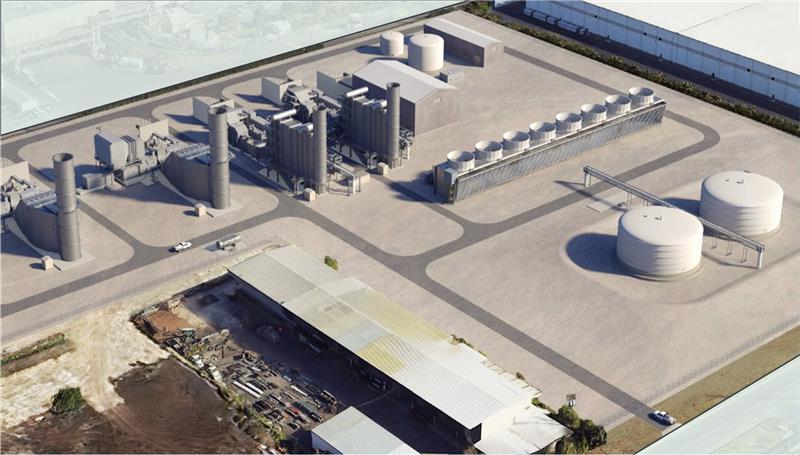
The Hawaiʻi State Energy Office’s Alternative Fuel, Repowering and Energy Transition Study estimates that approximately $2 billion will be required to upgrade Oʻahu’s aging thermal infrastructure with more efficient equipment and lower-carbon fuel sources. Consistent with that analysis, JERA’s proposal outlines how new energy assets could be developed on Oʻahu, including a ~500-megawatt hybrid combined-cycle and simple-cycle power facility, supported by offshore liquefied natural gas (LNG) import infrastructure.

The proposed facility would be designed with modern turbine technology that improves system stability and operational performance. It is expected to significantly reduce the generation cost of electricity compared to today’s oil-based power, while improving grid reliability and reducing overall greenhouse gas emissions. The proposed facility’s fast-start and fast-ramp capability is highly responsive to changing grid conditions, which will enable greater integration of renewables on Oʻahu.

JERA brings deep global expertise in high-efficiency combined-cycle gas turbine (CCGT) development, demonstrated through the modernization and construction of multi-gigawatt LNG-fired power plants in Japan and internationally. In the United States, JERA owns or has partial ownership in 10 power facilities.

Approximately 75% of the investment is related to the new power plant — infrastructure that would be required to replace aging generation and maintain grid reliability regardless of fuel source. The remaining 25% is related to LNG-related infrastructure, including a Floating Storage and Regasification Unit (FSRU) and associated supply components. Overall, more than 90% of the investment would be directed toward assets with long-term use or redeployment potential — including turbine equipment, grid-supporting infrastructure, pipelines and the FSRU — helping minimize stranded asset risk while maintaining flexibility for the future.

JERA is exploring opportunities to participate in the equity investment and to help mobilize additional capital to support development of the proposed infrastructure. If approved, the new infrastructure would be developed over the next several years, with a target commercial operation date in 2030.

A Coordinated Infrastructure Initiative 

JERA has partnered with local companies, including Hawaiʻi Gas, Pasha Hawaii and others to advance a coordinated modernization of energy and maritime infrastructure across Oʻahu. Each partner brings specialized expertise to strengthen Hawaiʻi’s energy security, system performance and supply chain resilience.

“Diversifying Hawaiʻi’s energy supply is a critical step toward strengthening our state’s energy security and reducing reliance on oil,” said Alicia Moy, Hawaiʻi Gas president and CEO. “Hawaiʻi Gas supports efforts to fortify and develop a pipeline infrastructure network that will be able to deliver the decarbonized fuels of the future, including renewable natural gas and hydrogen, which we currently blend into our fuel mix on Oʻahu today. The expansion of LNG availability for the state will not only lower costs and lower emissions, it will accelerate the transition to these future fuels. We are in support of modernizing our energy systems to provide for more stability, affordability and fuel efficiency for the people and businesses of Hawaiʻi.”

“Reliable maritime infrastructure is essential to keeping Hawaiʻi’s economy moving. Investments that expand LNG fueling capabilities and strengthen port energy systems can improve operational resilience, support cleaner shipping and help reinforce a more secure supply chain for the islands we serve,” said George Pasha, president and CEO, The Pasha Group.

Supporting Local Jobs and the Community 

The project is expected to support more than 1,100 skilled jobs and generate an estimated $150 million for Hawai‘i’s economy during development and construction, boosting workforce opportunities in the construction and energy sectors.

Once operational, the facility is expected to sustain approximately 170 permanent jobs and contribute an estimated $50 million annually to the state’s economy.

JERA is also looking to engage with the community by focusing on efforts that support workforce development, education and affordability in Hawai‘i. In addition, JERA plans to work with the state to establish an Energy Center of Excellence for the Pacific aimed at addressing the unique energy challenges of island economies.

Regulatory Review and Next Steps

The project would require approval by the Hawaiʻi Public Utilities Commission and other state and federal agencies. JERA anticipates initiating required state and federal permitting processes in the coming months, including potential filings with the Federal Energy Regulatory Commission (FERC) and the City and County of Honolulu, subject to final regulatory determinations.

A summary of JERA’s proposal to the state can be found here.

Information on the Hawai‘i Clean Energy Initiative can be found here.

About JERA

JERA is a global energy leader and Japan’s largest power generation company focused on providing cutting-edge solutions to the world’s energy issues. Established in 2015, the company produces one-third of Japan’s electricity and is one of the largest LNG buyers in the world. JERA has global reach and strength throughout the energy supply chain, including participation in upstream gas exploration and production, LNG projects, fuel procurement and transportation, and power generation globally. Through its U.S. subsidiary JERA Americas, the company owns thermal power plants, develops lower-carbon fuels such as hydrogen and ammonia, and advances energy infrastructure that delivers reliable and cleaner power to American businesses and communities. In support of a responsible energy transition, JERA aims to achieve net-zero CO₂ emissions from its domestic and overseas businesses by 2050.

Official Statement on the Rescission of the 2009 U.S. Endangerment Finding

Statement from Chief Energy Officer Mark Glick:

“We are deeply concerned that the federal administration has repealed the 2009 endangerment finding on greenhouse gases, erasing a foundational piece of the country’s efforts to address climate change. This action, despite overwhelming scientific evidence, represents one of the largest environmental rollbacks in U.S history. It stands in stark opposition to actions taken by the Green administration to combat climate change, increase resilience, and accelerate our transition to 100% clean, renewable energy. 

“Hawaiʻi’s energy policy is guided by clear priorities: lowering costs for families, reducing carbon emissions, strengthening grid reliability, and accelerating our transition to 100% clean, renewable energy. This recent federal action does not alter Hawaiʻi’s statutory and regulatory obligations to reduce greenhouse gas emissions. The State’s requirements remain in full effect under HRS §§ 225P-5 and 342B-71, as well as HAR § 11-60.1-204(k), and continue to guide our efforts to meet Hawaiʻi’s climate commitments.”

Statement from Attorney General Anne Lopez:

“EPA’s rescission of the 2009 Endangerment Finding ignores decades of scientific evidence and decades of law confirming the agency’s authority to protect public health from greenhouse gas pollution. This decision jeopardizes the air we breathe, the health of our communities, and the safety of future generations. Hawai‘i and our partners across the country will continue to hold federal agencies accountable to the law and to the science that supports it.

“This decision does not change the state’s ongoing litigation holding fossil fuel companies accountable for their role in climate-related harms, and we remain committed to using every legal tool available to protect our communities and environment.”

HAWAIʻI STATE ENERGY OFFICE SECURES $1.8 MILLION TO ADVANCE ENERGY, LAND USE AND DISASTER PLANNING TOOLS

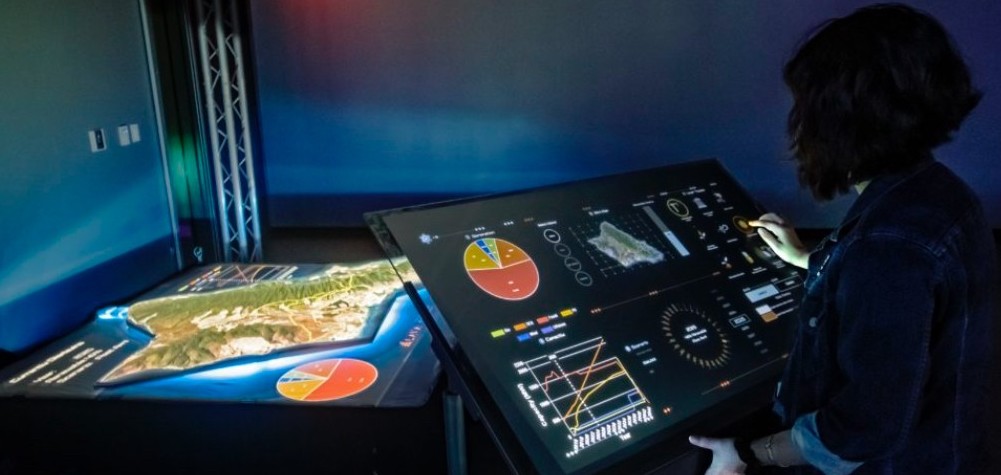
HONOLULU — As part of nearly $34 million in new federal funding secured by U.S. Senator Brian Schatz, the Hawai‘i State Energy Office (HSEO) will receive $1.8 million to expand advanced energy, land use and disaster planning visualization tools in partnership with the University of Hawai‘i Laboratory for Advanced Visualization & Applications (UH LAVA).

The funding supports the continued development of the Hawai‘i Advanced Visualization Energy Nexus (HAVEN) system — an interactive 3D platform that helps policymakers, planners and communities better understand complex energy infrastructure, land-use tradeoffs and resilience planning decisions. HAVEN makes technical planning data accessible to users with varying levels of expertise, supporting transparent and informed decision making across the state.

As Hawai‘i moves to increase energy security and modernize its aging grid, communities face difficult choices around infrastructure siting, regional impacts and costs. HAVEN enables users to visualize scenarios, explore planning model inputs and outputs, and assess cascading impacts related to energy, land use and disaster preparedness.
“HAVEN visualization technologies have proven to be extremely effective in making energy plans and analysis more approachable,” says Chris Yunker, managing director of resilience, clean transportation and analytics for HSEO. “The resulting energy plans incorporate informed input from policy makers and local communities.”

“HAVEN represents a new generation of planning tools that combine immersive visualization, geospatial intelligence and emerging AI capabilities,” adds Jason Leigh, director of UH LAVA. “With this support, we can scale these technologies statewide while training the next generation of visualization, data science and AI professionals here in Hawaiʻi.”

Funding for the HAVEN initiative will leverage HSEO’s nationally recognized Geospatial Decision Support System (GDSS), an award-winning platform used to support emergency response, resilience planning and prioritization of critical infrastructure investments. The GDSS maps the interdependencies within Hawaiʻi’s energy supply chain as well as the dependencies of critical community lifeline services that depend on it, including hospitals, shelters, first responders and food and water.

HAVEN also supports Hawaiʻi State Energy Office (HSEO) as the regional partner for the U.S. Department of Energy’s Energy Technology Innovation Partnership Program (ETIPP). ETIPP provides technical assistance to communities facing energy resilience challenges. HAVEN’s interactive visualization capabilities can be leveraged throughout the ETIPP strategic planning and technical deep-dive processes to help communities visualize energy system options, evaluate resilience and affordability impacts, and support informed local decision making.

Over a multiyear period, HSEO and UH LAVA will expand HAVEN’s capabilities, integrate complementary visualization tools and explore the use of AI to support semi-autonomous engagement to expand the scale of visualization deployment. The HAVEN project also supports workforce development by providing University of Hawai‘i graduate students with hands-on experience in advanced data visualization.

HAWAIʻI STATE ENERGY OFFICE TO SUPPORT COMMUNITY RESILIENCE PROJECTS IN HAWAIʻI AND AMERICAN SAMOA

In April 2025, the Hawaiʻi State Energy Office (HSEO) became the Pacific Regional Partner for the U.S. Department of Energy’s Energy Technology Innovation Partnership Project (ETIPP), which pairs local communities with national laboratories to tackle local energy challenges through planning and deep-dive technical projects. Now welcoming its fifth cohort, the program has supported more than 80 communities in eight regions across the United States and its territories with projects that include strategic energy planning, energy generation and storage assessments, weatherization, energy system optimization modeling and other in-depth energy analysis projects.

In 2026, HSEO will support the launch of five new ETIPP projects in Hawaiʻi and American Samoa to strengthen energy reliability and security.

  • American Samoa, including Tutuila and Manua Islands

The American Samoa Department of Homeland Security seeks support to reduce downtime and maintain the capabilities of critical emergency operations centers and communication towers during natural disaster events. ETIPP will help the department analyze outage frequency, evaluate on-site energy generation and storage options, and provide guidance for integrating on-site generation with existing generators to provide redundancy, reliability and security during outages.

  • Hawaiʻi County

Reliable power is essential for the county of Hawai‘i’s Department of Water Supply’s provision of potable water. The department seeks paths to energy reliability that will strengthen the county’s water security. ETIPP will help the county analyze the energy use and vulnerabilities of its drinking water system and assess cost-effective solutions to improve its reliability, security and efficiency.

  • Hauʻula and Punaluʻu

Hau‘ula and Punalu‘u are geographically isolated, meaning that outages are frequent, as power travels long distances to reach the communities through lines that are vulnerable to environmental damage. ETIPP will support Hau‘ula and Punalu‘u in evaluating the feasibility and capacity of on-site energy generation at key facilities to improve the reliability and security of their isolated power system and ensure that critical services continue for community members during outages.

  • Wahiawā and Whitmore Villages

Wahiawā and Whitmore villages are communities on Oʻahu interested in identifying local, cost-effective energy generation and storage options to reduce costs, including from hydropower and pumped hydropower storage. ETIPP technical assistance will provide hydrologic resource modeling, conceptual microgrid designs and implementation strategies to improve the reliability and security of Wahiawā and Whitmore’s energy systems.

  • Wai‘anae

Through ETIPP, Waiʻanae developed a strategic energy plan to identify potential solutions to support residents during emergencies and improve the reliability and affordability of their energy system. The program will continue supporting Wai‘anae’s goals for community-level reliability by evaluating potential resilience hub locations, microgrid potential and generation options.

Technical assistance from ETIPP helps communities proactively identify and implement solutions that suit their particular needs, leveraging the experience and expertise of a broad coalition of local stakeholders, regional organizations, national laboratories and the Department of Energy.

“Working with communities to enable strategic investments in energy planning and community resilience is fundamentally important to our ability to sustain a reliable, affordable, and environmentally sound energy ecosystem,” said Mark Glick, chief energy officer for the state. “All sectors of Hawai’i’s economy and well-being depend on it.”

HSEO has already supported nine communities in Hawaiʻi and the Pacific Region through ETIPP’s first four cohorts and will continue working closely with local governments and community-based organizations to develop energy solutions that address specific geographic, cultural and economic needs in Hawaiʻi and the Pacific region.

Ongoing ETIPP projects across the state include technical analysis of floating PV and pumped hydro projects on Moloka‘i, microgrids on O‘ahu, and resilience hubs on Hawaiian Homesteads on Maui.

About ETIPP

ETIPP is a community-led technical support program for coastal, remote, and island communities to access unique solutions and increase energy resilience. By uniting federal agencies, national laboratories, regional organizations, and community stakeholders, ETIPP provides tailored technical support to help communities achieve affordable, reliable solutions to their energy system challenges. This collaborative model leverages the combined expertise and resources of its partners to deliver comprehensive, practical solutions that align with local needs. Learn more about ETIPP.

STATE OF HAWAI‘I LAUNCHES TRAINING FOR RESIDENTIAL ENERGY CONTRACTORS TO BUILD LOCAL ENERGY WORKFORCE

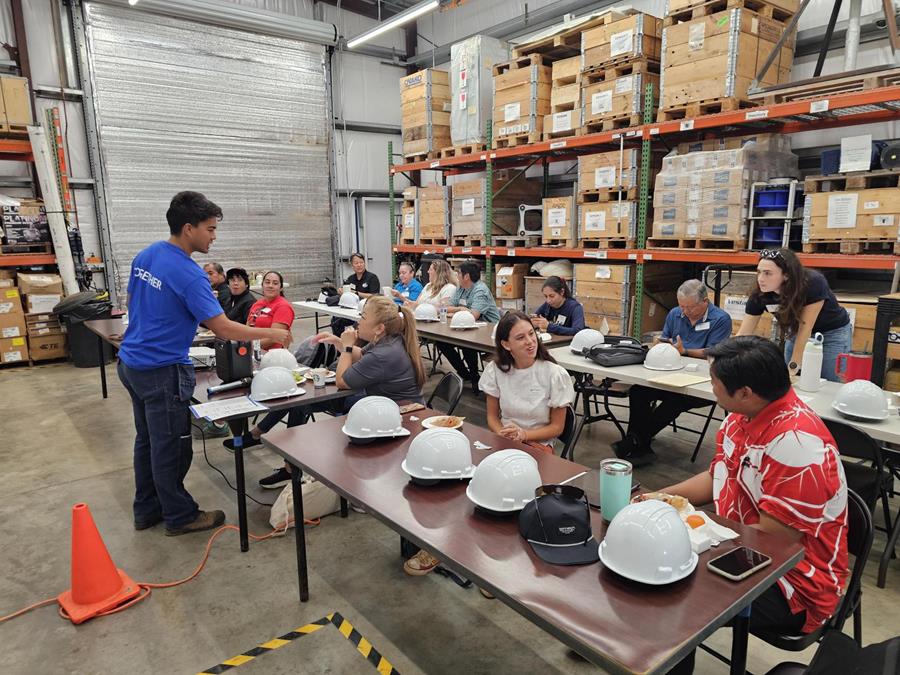
HONOLULU — The Hawai‘i State Energy Office (HSEO) will launch a new Training for Residential Energy Contractors (TREC) program in January 2026 as a statewide initiative designed to grow Hawai‘i’s energy contractor workforce and prepare local professionals to deliver home energy upgrades under the state’s Home Energy Rebates program. The TREC program will provide hands-on training and nationally recognized certifications for contractors, builders and tradespeople across Hawai‘i, ensuring that the state’s workforce is ready to meet rising demand for home energy retrofits and electrification projects.


To carry out the training, HSEO has partnered with Hā Sustainability (a Hawai‘i-based sustainability consultancy focused on community and workforce development), Everblue (a national training provider) and Hui o Hau‘ula (a community-based organization supporting workforce and economic development in rural O‘ahu.)

“The TREC contractor training program is the backbone of Hawai‘i’s clean energy future powered by local expertise,” said Cameron Black, Managing Director, Jobs and Outreach Branch of the Hawai‘i State Energy Office. “This program has two major objectives: it creates opportunities for our local contractor base to expand their skills and credentials, and it ensures that a highly trained local workforce is installing energy efficiency retrofits and upgrades that save money for households throughout Hawai‘i.”

“TREC is about empowering Hawai‘i’s local workforce to lead the clean energy transition,” added Hannah Shipman-Peila, co-founder of Hā Sustainability. “By equipping contractors with nationally recognized certifications and hands-on training, we’re ensuring that home energy upgrades are delivered by the very people who call these islands home.”

Training Opportunities


Through partnerships with training provider Everblue and the Building Performance Institute (BPI), TREC will offer a range of industry-recognized courses beginning in early 2026:

  • BPI Building Science Principles Certification: Covers the house-as-a-system
    concept, heat and insulation, air sealing, moisture control and building science
    fundamentals to improve home performance, health and efficiency.
  • BPI Building Analyst Technician (BA-T): Focuses on diagnostic testing, data
    gathering, combustion safety, blower door testing and energy auditing. It prepares
    trainees for BPI BA-T certification.
  • BPI Building Analyst Professional (BA-P): Advanced training in home energy auditing
    using modeling software to identify performance issues and recommend energy
    efficiency improvements.
  • Everblue Heat Pump Installation: Training in installation, commissioning, servicing and
    troubleshooting of heat pump systems, with emphasis on A/C and heat pump
    configurations, electrical safety and maintenance.
  • ENERGY STAR Appliance Certification: Certification for inspection of energy-efficient
    appliances to meet ENERGY STAR standards, aligned with HEAR rebate requirements.
  • ENERGY STAR Homes Certification: Training for certifying and inspecting homes that
    meet ENERGY STAR efficiency standards.
  • Multi-Family Energy Auditor: Prepares professionals to perform energy audits for
    multi-family buildings and earn the Multifamily Energy Auditor Certification.

About TREC
Funding for the TREC program, officially known as the State-Based Home Energy Efficiency Contractor Training Grants, includes $200 million allocated by the U.S. Department of Energy under the Inflation Reduction Act. The funding is designed to help states and territories lower the costs associated with training, testing, and certifying contractors in residential energy efficiency and electrification. Hawaiʻi’s allocation of $1,194,820 is administered by the Hawai‘i State Energy Office in support of the state’s
mission to reduce electricity costs for residents, enhance home comfort and help Hawai‘i achieve its goal of 100% renewable energy by 2045.


Get Involved


Contractors, electricians, HVAC professionals and other tradespeople are encouraged to learn more and register for training opportunities starting in January 2026 at
https://energy.hawaii.gov/trec-energy-training-program/
For more information, please contact (800) 657-3044.

JERA AND STATE OF HAWAI’I SIGN STRATEGIC PARTNERING AGREEMENT TO ADVANCE ENERGY TRANSITION

TOKYO – Oct. 14, 2025 – JERA Co., Inc. (“JERA”), Japan’s largest power producer, today announced the signing of a Strategic Partnering Agreement (“SPA”) with the Office of the Governor of the State of Hawai‘i (“the State”) to support Hawai‘i’s decarbonization goals and energy transition.

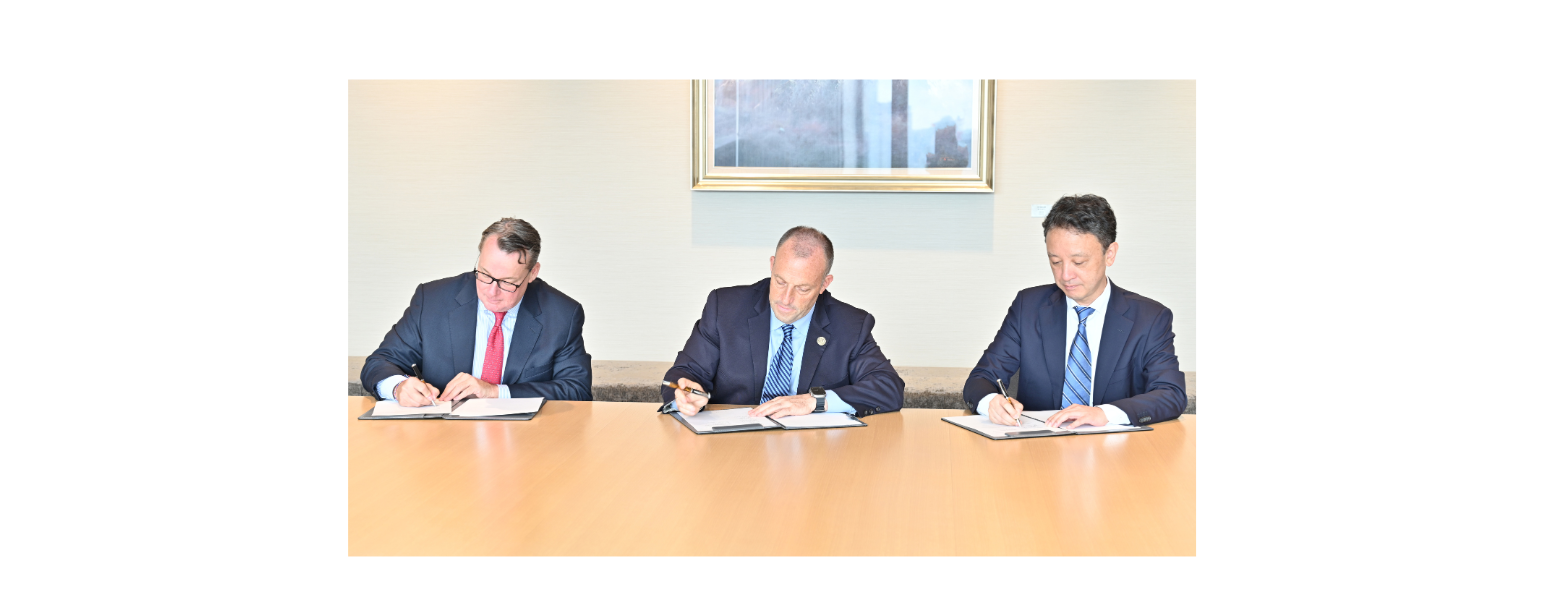
The SPA was signed on October 6, 2025, at JERA’s Tokyo headquarters by Governor Josh Green, and JERA Global CEO Yukio Kani, marking a new step in Hawai‘i–Japan collaboration on energy partnership and future-oriented development. The agreement establishes a framework for long-term collaboration among JERA Co., Inc., its U.S. subsidiary JERA Americas Inc., and the State of Hawai‘i focusing on fuel diversity and developing pathways toward decarbonization.

This partnership is designed to help realize the Hawai‘i State Energy Office’s Alternative Fuels, Repowering and Energy Transition Study, published in January 2025, which concluded in the short term that the state should accelerate its shift away from oil by using affordable and reliable alternative fuels, including natural gas. Governor Josh Green said,“The State of Hawai‘i is committed to achieving a cleaner, more sustainable energy future for our people. By collaborating with JERA—Japan’s largest power producer and a recognized global leader in energy transition—we are gaining access to valuable expertise and experience that will help accelerate our decarbonization journey while improving reliability and affordability for our residents.”

Yukio Kani, Global CEO of JERA Co., Inc., said,“JERA is honored to partner with the State of Hawai‘i in advancing its energy transition goals. As island communities, Japan and Hawai‘i share similar challenges and opportunities in pursuing affordability, stability, and sustainability. By working together, we aim to develop practical, innovative solutions that strengthen energy resilience and reduce costs for the people of Hawai‘i.”

JERA, brings extensive experience in the development and operation of large-scale, reliable energy infrastructure worldwide, with a growing focus on low carbon fuels, hydrogen, ammonia, and renewable energy integration. The company has committed to achieving net-zero CO₂ emissions from its domestic and international operations by 2050, as part of its mission to provide cutting edge solutions to the worlds’ energy challenges and ensure a sustainable and stable global energy supply.

About JERA

JERA is a global energy leader and Japan’s largest power generation company focused on providing cutting-edge solutions to the world’s energy issues. Established in 2015, the Company produces one-third of Japan’s electricity, and is one of the largest LNG buyers in the world. JERA has global reach and strength throughout the energy supply chain, from participation in LNG upstream projects and fuel procurement, through fuel transportation to power generation. In support of a responsible energy transition, JERA has committed to achieving net-zero CO₂ emissions from its domestic and overseas businesses by 2050.

GOVERNOR GREEN STRENGTHENS HAWAI‘I–JAPAN RELATIONS,SIGNS CLEAN ENERGY MEMORANDA

HONOLULU – Governor Josh Green today concluded a weeklong visit to Japan, where he and First Lady Jaime Kanani Green led a Hawai‘i delegation through Tokyo, Osaka and Okinawa, to strengthen partnerships in clean energy, business development, education and culture.

In Tokyo, Governor Green met with senior leaders from NEC Corporation, JERA Co. Inc. and the Yomiuri Shimbun Group, to explore opportunities in technology, energy and tourism. He also visited Expo 2025 Osaka, where Hawai‘i was recognized during a United States Pavilion event, hosted by Ambassador William E. Grayson, celebrating America’s 250th anniversary and the enduring friendship between Japan and the United States. Governor Green met with officials from Japan, France and the U.S. Pavillion, including U.S. Ambassador to Japan George Glass.

A Strategic Partnering Agreement signed by Governor Green on October 6 establishes a framework for collaboration among JERA Co., Inc., JERA Americas Inc. and the state of Hawaiʻi. The agreement will support the state’s decarbonization goals, advancing clean energy initiatives recommended in the Alternative Fuels, Repowering and Energy Transition study published by the Hawaiʻi State Energy Office in January 2025. 

JERA, the largest power producer in Japan and one of the largest power producers globally, has committed to eliminating carbon dioxide (CO2) emissions from domestic and international operations by 2050. JERA brings unparalleled expertise in energy infrastructure and strategic investment, in addition to its growing emphasis on low- and zero-carbon energy development. These efforts are part of Hawaiʻi’s strategy to diversify its energy portfolio.

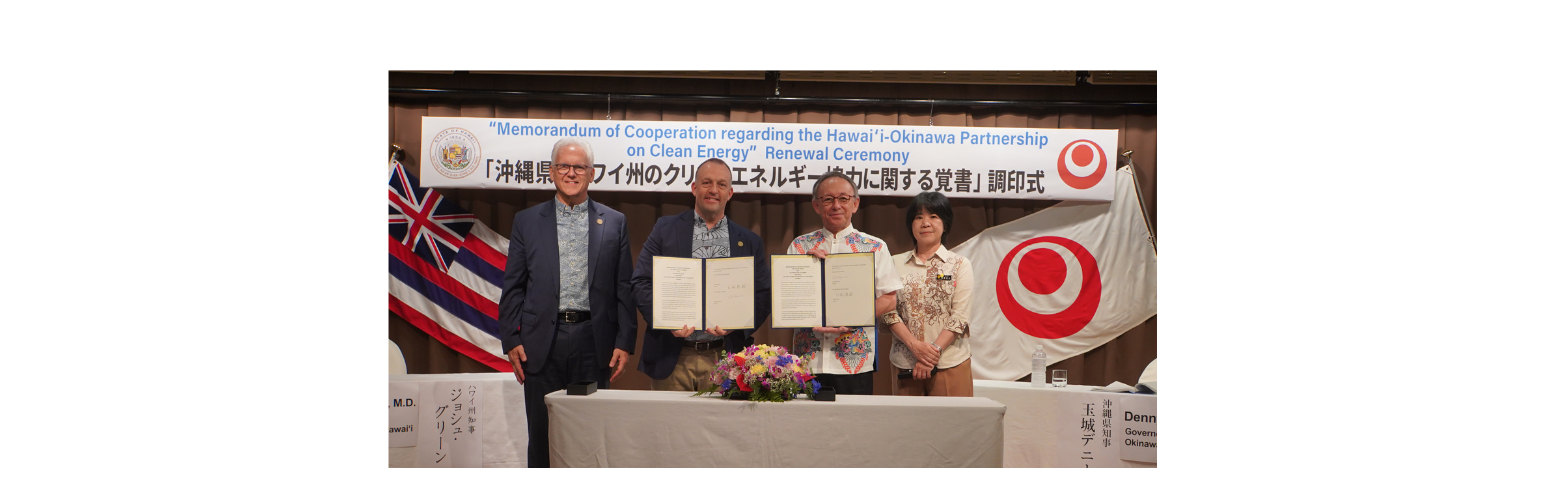
In Okinawa, Governor Green and Okinawa Governor Denny Tamaki signed a Five-Year Memorandum of Cooperation on Clean Energy, renewing a partnership that began in 2010 between the Hawai‘i State Energy Office and the Okinawa Prefectural Government. The agreement advances shared goals for renewable energy, clean transportation and grid innovation across island communities.

“Hawai‘i and Okinawa share more than history, we share purpose,” said Governor Green. “Together, we’re proving that island communities can lead the world in clean energy and resilience, while honoring the cultural ties that bind us.”

The visit also marked two major milestones: the 40th anniversary of the Hawai‘i–Okinawa sister-state relationship and the 125th anniversary of Okinawan immigration to Hawai‘i. These historic connections continue to shape the social, cultural and economic fabric of both island communities, deepening bonds built on shared values of aloha, family and perseverance.

Governor Green was joined by state legislators and business leaders, including Senate President Ronald Kouchi, Vice Speaker Linda Ichiyama, Senators Glenn Wakai, Chris Lee, and Michelle Kidani, Representatives Gregg Takayama, Dee Morikawa and Kyle Yamashita, as well as Department of Business, Economic Development and Tourism Director James Kunane Tokioka and Hawai‘i State Energy Office Director Mark Glick.

“Japan remains one of Hawai‘i’s most important partners — in energy, commerce, education and people-to-people exchange,” said Governor Green. “This mission reaffirms our shared commitment to innovation, sustainability and friendship that extends far beyond the Pacific.”

Governor Green will return to Honolulu on October 15 following a stop in San Francisco, where he will speak at the Salesforce Dreamforce Conference.

Photos, courtesy Office of the Governor, can be found here.


HAWAI‘I JOINS U.S. AFFORDABLE CLEAN CARS COALITION 

HONOLULU —The state of Hawaiʻi has joined the Affordable Clean Cars Coalition — a growing partnership among the states to help sustain America’s transition to cleaner and more affordable cars, support U.S. automotive manufacturers and workers, and safeguard states’ clean air authority.

Governor Green joined 12 other governors who launched the coalition earlier this year. “Hawaiʻi is committed to a clean energy future that protects the health of our people,” he said. “By investing in electrification, we can put more electric vehicles on the road and give our families more choices and lower costs, while safeguarding our communities from harmful pollution.”

The effort is one of several multistate partnerships hosted by the U.S. Climate Alliance, which launched a nationwide effort last month to encourage Americans to take advantage of federal clean energy incentives — including thousands of dollars in tax credits for EVs and EV charger installations — before they expire.

>