ENERGY AFFORDABILITY SIGNALLED AS STATE PRIORITY – Public Utilities Commission Heeds Calls for Rate Accountability in Waiau Repowering

HONOLULU — The First Decision and Order issued by the Public Utilities Commission (PUC), under the direction of Chair Jon Itomura, signals energy affordability as a state priority, supporting broad state initiatives on affordable housing, healthcare and a firm commitment to reduce the cost of living for Hawaiʻi residents.  

In its decision, the PUC did not approve Hawaiian Electric’s request to recover up to $1.155 billion from ratepayers to upgrade the 75-year-old Waiau power plant, but instead set a cost-recovery cap at the utility’s original competitive bid of $847 million, plus a limited inflation adjustment of 10%, in a win for ratepayers. 

“This administration will continue to fight for greater affordability for Hawaiʻi’s people,” said Governor Josh Green. “Hawaiʻi residents have dealt with reliability concerns and the highest electricity costs in the nation, due to polluting fuels imported from places like Libya and inefficient power generation for decades. We have a generational opportunity to make meaningful change and my administration has been united in saying we will not condemn another generation to costly utility bills that it can’t afford.” 

Agencies including the PUC, the Consumer Advocate and the Hawaiʻi State Energy Office supported the imposition of strict cost controls to limit the financial impacts of the Decision on customers.  

In its Order, the PUC also requires HECO to meet specific renewable-fuel milestones to ensure the Waiau project supports the state’s transition to a 100% renewable energy future, requiring the utility to operate the units with at least 51% renewable fuel by 2032, or when the first four units begin service, whichever occurs first, 75% renewable fuel by 2040 and 100% renewable fuel by 2045. 

Previously, in a Statement of Position filed in the Waiau Docket, Chief Energy Officer Mark Glick requested that the PUC delay final approval of the Waiau Repower Project to more fully address the Project’s revised cost profile that exceeded limits imposed by the Competitive Bidding Framework; and to be made aware of a more comprehensive firm capacity proposal under a Strategic Partnering Agreement with JERA announced on October 7, 2025, that is estimated to reduce costs for the average Hawaiʻi household by $500 a year. 

While the delay was not granted, Glick lauded the imposition of cost controls in the Decision and Order consistent with the Competitive Bidding Framework limits cited by the State Energy Office, saying: “The PUC’s action on this Docket reflects a continued commitment to balancing safety, reliability and affordability that underlies Hawaiʻi’s long‑term clean energy goals.” 

The Green administration will continue to aggressively advocate for local residents and businesses alike by pushing for cost accountability at the PUC, protecting renewable development support and by spearheading new energy opportunities that lower consumer bills. 

In a proposal submitted to the state on March 17, 2026, JERA, Japan’s largest power producer, identified LNG as a cost-effective component of lowering the state’s carbon emissions, accelerating renewable energy integration onto the grid and going well beyond estimated savings in the HSEO Alternative Fuels, Repowering and Energy Transition Study. JERA proposes conclusive cost savings of 20% over oil (an average of $500/year per household) and 50% savings over imported biofuels, with LNG infrastructure paid back in less than two years. 

The company has indicated that a full proposal to the PUC is pending, which will provide regulators and ratepayers with additional energy pathways, all of which will have to undergo PUC and regulatory evaluation. 

Continuing on a status quo path will result in rising energy prices and Hawaiʻi continuing to generate electricity by burning oil, when the price of crude oil hovers close to $100/barrel and the cost of gasoline has spiked above $5/gallon. 

“We have a credible proposal on the table to make energy more affordable,” Governor Green concluded. “People want change—this administration will continue to deliver change that prioritizes the needs of the people of Hawaiʻi.” 
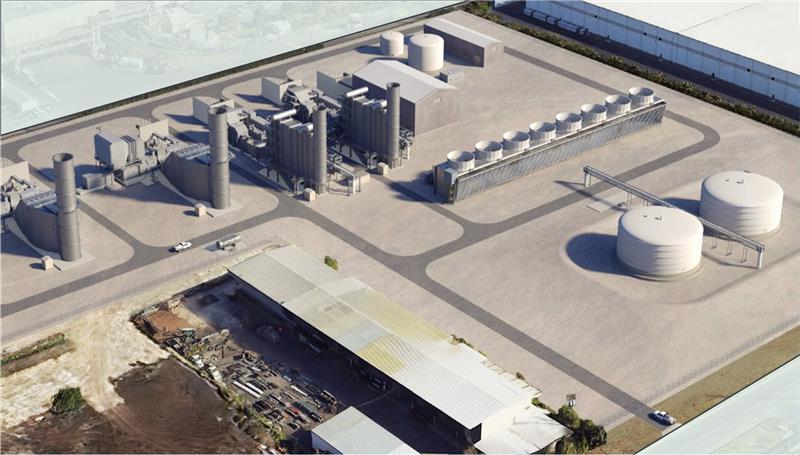
STATE OF HAWAIʻI RECEIVES PROPOSAL FROM JERA TO MODERNIZE OʻAHU’S ENERGY INFRASTRUCTURE

HONOLULU — JERA Co., Inc. (“JERA”), Japan’s largest power provider, has shared its proposal with the state of Hawai‘i to modernize Oʻahu’s energy system, building on the Strategic Partnering Agreement signed in October 2025.

Developed with input from Hawaiʻi energy stakeholders and supported by agreements with local partners, the proposal seeks to accelerate the replacement of aging, inefficient oil-fired generation on Oʻahu with modern, high-efficiency infrastructure designed to deliver affordability for Hawaiʻi families and businesses, enhance energy grid resilience and lower emissions.

“Hawaiʻi stands at a defining moment in our energy future. Our administration is focused on lowering costs for families, reducing carbon emissions, strengthening grid reliability and accelerating our transition to 100% clean, renewable energy,” said Governor Josh Green. “This proposal represents a transformative overhaul of our electrical grid and a tangible step to move Hawaiʻi off its historic dependence on oil. Through this partnership with JERA and its partners, we are bringing billions of dollars in new energy investments to Hawaiʻi — securing more affordable, reliable energy for the people of our state.”

JERA Americas CEO John O’Brien said, “Since 2023, JERA has been working in Hawai‘i to explore how our experience addressing similar energy challenges in Japan can help support the state’s energy transition. The Strategic Partnering Agreement deepened that effort, allowing us to work more closely with local partners to evaluate pathways to modernize Oʻahu’s energy system. This proposal reflects that collaboration and presents a path to reduce costs for residents and businesses, strengthen reliability and support Hawaiʻi’s clean energy goals. We are grateful for the opportunity to work alongside the state and local stakeholders to help bring the investment and expertise needed to advance this effort.”

Modern Infrastructure to Strengthen Oʻahu’s Grid

The Hawaiʻi State Energy Office’s Alternative Fuel, Repowering and Energy Transition Study estimates that approximately $2 billion will be required to upgrade Oʻahu’s aging thermal infrastructure with more efficient equipment and lower-carbon fuel sources. Consistent with that analysis, JERA’s proposal outlines how new energy assets could be developed on Oʻahu, including a ~500-megawatt hybrid combined-cycle and simple-cycle power facility, supported by offshore liquefied natural gas (LNG) import infrastructure.

The proposed facility would be designed with modern turbine technology that improves system stability and operational performance. It is expected to significantly reduce the generation cost of electricity compared to today’s oil-based power, while improving grid reliability and reducing overall greenhouse gas emissions. The proposed facility’s fast-start and fast-ramp capability is highly responsive to changing grid conditions, which will enable greater integration of renewables on Oʻahu.

JERA brings deep global expertise in high-efficiency combined-cycle gas turbine (CCGT) development, demonstrated through the modernization and construction of multi-gigawatt LNG-fired power plants in Japan and internationally. In the United States, JERA owns or has partial ownership in 10 power facilities.

Approximately 75% of the investment is related to the new power plant — infrastructure that would be required to replace aging generation and maintain grid reliability regardless of fuel source. The remaining 25% is related to LNG-related infrastructure, including a Floating Storage and Regasification Unit (FSRU) and associated supply components. Overall, more than 90% of the investment would be directed toward assets with long-term use or redeployment potential — including turbine equipment, grid-supporting infrastructure, pipelines and the FSRU — helping minimize stranded asset risk while maintaining flexibility for the future.

JERA is exploring opportunities to participate in the equity investment and to help mobilize additional capital to support development of the proposed infrastructure. If approved, the new infrastructure would be developed over the next several years, with a target commercial operation date in 2030.

A Coordinated Infrastructure Initiative 

JERA has partnered with local companies, including Hawaiʻi Gas, Pasha Hawaii and others to advance a coordinated modernization of energy and maritime infrastructure across Oʻahu. Each partner brings specialized expertise to strengthen Hawaiʻi’s energy security, system performance and supply chain resilience.

“Diversifying Hawaiʻi’s energy supply is a critical step toward strengthening our state’s energy security and reducing reliance on oil,” said Alicia Moy, Hawaiʻi Gas president and CEO. “Hawaiʻi Gas supports efforts to fortify and develop a pipeline infrastructure network that will be able to deliver the decarbonized fuels of the future, including renewable natural gas and hydrogen, which we currently blend into our fuel mix on Oʻahu today. The expansion of LNG availability for the state will not only lower costs and lower emissions, it will accelerate the transition to these future fuels. We are in support of modernizing our energy systems to provide for more stability, affordability and fuel efficiency for the people and businesses of Hawaiʻi.”

“Reliable maritime infrastructure is essential to keeping Hawaiʻi’s economy moving. Investments that expand LNG fueling capabilities and strengthen port energy systems can improve operational resilience, support cleaner shipping and help reinforce a more secure supply chain for the islands we serve,” said George Pasha, president and CEO, The Pasha Group.

Supporting Local Jobs and the Community 

The project is expected to support more than 1,100 skilled jobs and generate an estimated $150 million for Hawai‘i’s economy during development and construction, boosting workforce opportunities in the construction and energy sectors.

Once operational, the facility is expected to sustain approximately 170 permanent jobs and contribute an estimated $50 million annually to the state’s economy.

JERA is also looking to engage with the community by focusing on efforts that support workforce development, education and affordability in Hawai‘i. In addition, JERA plans to work with the state to establish an Energy Center of Excellence for the Pacific aimed at addressing the unique energy challenges of island economies.

Regulatory Review and Next Steps

The project would require approval by the Hawaiʻi Public Utilities Commission and other state and federal agencies. JERA anticipates initiating required state and federal permitting processes in the coming months, including potential filings with the Federal Energy Regulatory Commission (FERC) and the City and County of Honolulu, subject to final regulatory determinations.

A summary of JERA’s proposal to the state can be found here.

Information on the Hawai‘i Clean Energy Initiative can be found here.

About JERA

JERA is a global energy leader and Japan’s largest power generation company focused on providing cutting-edge solutions to the world’s energy issues. Established in 2015, the company produces one-third of Japan’s electricity and is one of the largest LNG buyers in the world. JERA has global reach and strength throughout the energy supply chain, including participation in upstream gas exploration and production, LNG projects, fuel procurement and transportation, and power generation globally. Through its U.S. subsidiary JERA Americas, the company owns thermal power plants, develops lower-carbon fuels such as hydrogen and ammonia, and advances energy infrastructure that delivers reliable and cleaner power to American businesses and communities. In support of a responsible energy transition, JERA aims to achieve net-zero CO₂ emissions from its domestic and overseas businesses by 2050.

Official Statement on the Rescission of the 2009 U.S. Endangerment Finding

Statement from Chief Energy Officer Mark Glick:

“We are deeply concerned that the federal administration has repealed the 2009 endangerment finding on greenhouse gases, erasing a foundational piece of the country’s efforts to address climate change. This action, despite overwhelming scientific evidence, represents one of the largest environmental rollbacks in U.S history. It stands in stark opposition to actions taken by the Green administration to combat climate change, increase resilience, and accelerate our transition to 100% clean, renewable energy. 

“Hawaiʻi’s energy policy is guided by clear priorities: lowering costs for families, reducing carbon emissions, strengthening grid reliability, and accelerating our transition to 100% clean, renewable energy. This recent federal action does not alter Hawaiʻi’s statutory and regulatory obligations to reduce greenhouse gas emissions. The State’s requirements remain in full effect under HRS §§ 225P-5 and 342B-71, as well as HAR § 11-60.1-204(k), and continue to guide our efforts to meet Hawaiʻi’s climate commitments.”

Statement from Attorney General Anne Lopez:

“EPA’s rescission of the 2009 Endangerment Finding ignores decades of scientific evidence and decades of law confirming the agency’s authority to protect public health from greenhouse gas pollution. This decision jeopardizes the air we breathe, the health of our communities, and the safety of future generations. Hawai‘i and our partners across the country will continue to hold federal agencies accountable to the law and to the science that supports it.

“This decision does not change the state’s ongoing litigation holding fossil fuel companies accountable for their role in climate-related harms, and we remain committed to using every legal tool available to protect our communities and environment.”

HAWAIʻI STATE ENERGY OFFICE SECURES $1.8 MILLION TO ADVANCE ENERGY, LAND USE AND DISASTER PLANNING TOOLS

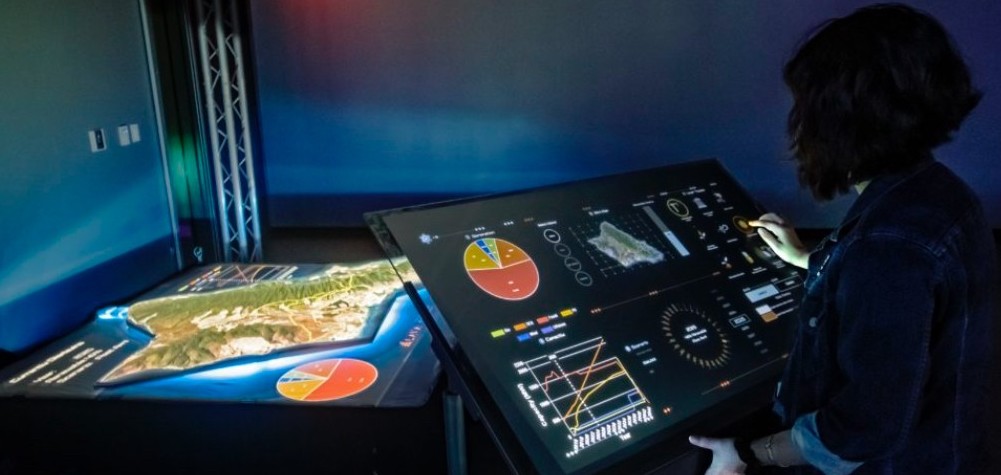
HONOLULU — As part of nearly $34 million in new federal funding secured by U.S. Senator Brian Schatz, the Hawai‘i State Energy Office (HSEO) will receive $1.8 million to expand advanced energy, land use and disaster planning visualization tools in partnership with the University of Hawai‘i Laboratory for Advanced Visualization & Applications (UH LAVA).

The funding supports the continued development of the Hawai‘i Advanced Visualization Energy Nexus (HAVEN) system — an interactive 3D platform that helps policymakers, planners and communities better understand complex energy infrastructure, land-use tradeoffs and resilience planning decisions. HAVEN makes technical planning data accessible to users with varying levels of expertise, supporting transparent and informed decision making across the state.

As Hawai‘i moves to increase energy security and modernize its aging grid, communities face difficult choices around infrastructure siting, regional impacts and costs. HAVEN enables users to visualize scenarios, explore planning model inputs and outputs, and assess cascading impacts related to energy, land use and disaster preparedness.
“HAVEN visualization technologies have proven to be extremely effective in making energy plans and analysis more approachable,” says Chris Yunker, managing director of resilience, clean transportation and analytics for HSEO. “The resulting energy plans incorporate informed input from policy makers and local communities.”

“HAVEN represents a new generation of planning tools that combine immersive visualization, geospatial intelligence and emerging AI capabilities,” adds Jason Leigh, director of UH LAVA. “With this support, we can scale these technologies statewide while training the next generation of visualization, data science and AI professionals here in Hawaiʻi.”

Funding for the HAVEN initiative will leverage HSEO’s nationally recognized Geospatial Decision Support System (GDSS), an award-winning platform used to support emergency response, resilience planning and prioritization of critical infrastructure investments. The GDSS maps the interdependencies within Hawaiʻi’s energy supply chain as well as the dependencies of critical community lifeline services that depend on it, including hospitals, shelters, first responders and food and water.

HAVEN also supports Hawaiʻi State Energy Office (HSEO) as the regional partner for the U.S. Department of Energy’s Energy Technology Innovation Partnership Program (ETIPP). ETIPP provides technical assistance to communities facing energy resilience challenges. HAVEN’s interactive visualization capabilities can be leveraged throughout the ETIPP strategic planning and technical deep-dive processes to help communities visualize energy system options, evaluate resilience and affordability impacts, and support informed local decision making.

Over a multiyear period, HSEO and UH LAVA will expand HAVEN’s capabilities, integrate complementary visualization tools and explore the use of AI to support semi-autonomous engagement to expand the scale of visualization deployment. The HAVEN project also supports workforce development by providing University of Hawai‘i graduate students with hands-on experience in advanced data visualization.

HAWAIʻI STATE ENERGY OFFICE TO SUPPORT COMMUNITY RESILIENCE PROJECTS IN HAWAIʻI AND AMERICAN SAMOA

In April 2025, the Hawaiʻi State Energy Office (HSEO) became the Pacific Regional Partner for the U.S. Department of Energy’s Energy Technology Innovation Partnership Project (ETIPP), which pairs local communities with national laboratories to tackle local energy challenges through planning and deep-dive technical projects. Now welcoming its fifth cohort, the program has supported more than 80 communities in eight regions across the United States and its territories with projects that include strategic energy planning, energy generation and storage assessments, weatherization, energy system optimization modeling and other in-depth energy analysis projects.

In 2026, HSEO will support the launch of five new ETIPP projects in Hawaiʻi and American Samoa to strengthen energy reliability and security.

  • American Samoa, including Tutuila and Manua Islands

The American Samoa Department of Homeland Security seeks support to reduce downtime and maintain the capabilities of critical emergency operations centers and communication towers during natural disaster events. ETIPP will help the department analyze outage frequency, evaluate on-site energy generation and storage options, and provide guidance for integrating on-site generation with existing generators to provide redundancy, reliability and security during outages.

  • Hawaiʻi County

Reliable power is essential for the county of Hawai‘i’s Department of Water Supply’s provision of potable water. The department seeks paths to energy reliability that will strengthen the county’s water security. ETIPP will help the county analyze the energy use and vulnerabilities of its drinking water system and assess cost-effective solutions to improve its reliability, security and efficiency.

  • Hauʻula and Punaluʻu

Hau‘ula and Punalu‘u are geographically isolated, meaning that outages are frequent, as power travels long distances to reach the communities through lines that are vulnerable to environmental damage. ETIPP will support Hau‘ula and Punalu‘u in evaluating the feasibility and capacity of on-site energy generation at key facilities to improve the reliability and security of their isolated power system and ensure that critical services continue for community members during outages.

  • Wahiawā and Whitmore Villages

Wahiawā and Whitmore villages are communities on Oʻahu interested in identifying local, cost-effective energy generation and storage options to reduce costs, including from hydropower and pumped hydropower storage. ETIPP technical assistance will provide hydrologic resource modeling, conceptual microgrid designs and implementation strategies to improve the reliability and security of Wahiawā and Whitmore’s energy systems.

  • Wai‘anae

Through ETIPP, Waiʻanae developed a strategic energy plan to identify potential solutions to support residents during emergencies and improve the reliability and affordability of their energy system. The program will continue supporting Wai‘anae’s goals for community-level reliability by evaluating potential resilience hub locations, microgrid potential and generation options.

Technical assistance from ETIPP helps communities proactively identify and implement solutions that suit their particular needs, leveraging the experience and expertise of a broad coalition of local stakeholders, regional organizations, national laboratories and the Department of Energy.

“Working with communities to enable strategic investments in energy planning and community resilience is fundamentally important to our ability to sustain a reliable, affordable, and environmentally sound energy ecosystem,” said Mark Glick, chief energy officer for the state. “All sectors of Hawai’i’s economy and well-being depend on it.”

HSEO has already supported nine communities in Hawaiʻi and the Pacific Region through ETIPP’s first four cohorts and will continue working closely with local governments and community-based organizations to develop energy solutions that address specific geographic, cultural and economic needs in Hawaiʻi and the Pacific region.

Ongoing ETIPP projects across the state include technical analysis of floating PV and pumped hydro projects on Moloka‘i, microgrids on O‘ahu, and resilience hubs on Hawaiian Homesteads on Maui.

About ETIPP

ETIPP is a community-led technical support program for coastal, remote, and island communities to access unique solutions and increase energy resilience. By uniting federal agencies, national laboratories, regional organizations, and community stakeholders, ETIPP provides tailored technical support to help communities achieve affordable, reliable solutions to their energy system challenges. This collaborative model leverages the combined expertise and resources of its partners to deliver comprehensive, practical solutions that align with local needs. Learn more about ETIPP.

STATE OF HAWAI‘I LAUNCHES TRAINING FOR RESIDENTIAL ENERGY CONTRACTORS TO BUILD LOCAL ENERGY WORKFORCE

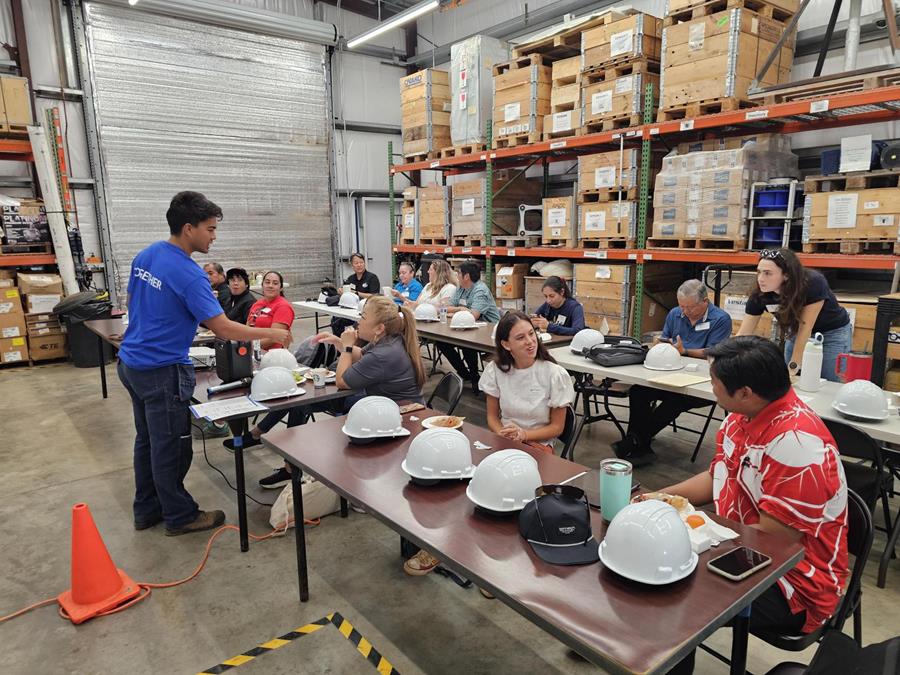
HONOLULU — The Hawai‘i State Energy Office (HSEO) will launch a new Training for Residential Energy Contractors (TREC) program in January 2026 as a statewide initiative designed to grow Hawai‘i’s energy contractor workforce and prepare local professionals to deliver home energy upgrades under the state’s Home Energy Rebates program. The TREC program will provide hands-on training and nationally recognized certifications for contractors, builders and tradespeople across Hawai‘i, ensuring that the state’s workforce is ready to meet rising demand for home energy retrofits and electrification projects.


To carry out the training, HSEO has partnered with Hā Sustainability (a Hawai‘i-based sustainability consultancy focused on community and workforce development), Everblue (a national training provider) and Hui o Hau‘ula (a community-based organization supporting workforce and economic development in rural O‘ahu.)

“The TREC contractor training program is the backbone of Hawai‘i’s clean energy future powered by local expertise,” said Cameron Black, Managing Director, Jobs and Outreach Branch of the Hawai‘i State Energy Office. “This program has two major objectives: it creates opportunities for our local contractor base to expand their skills and credentials, and it ensures that a highly trained local workforce is installing energy efficiency retrofits and upgrades that save money for households throughout Hawai‘i.”

“TREC is about empowering Hawai‘i’s local workforce to lead the clean energy transition,” added Hannah Shipman-Peila, co-founder of Hā Sustainability. “By equipping contractors with nationally recognized certifications and hands-on training, we’re ensuring that home energy upgrades are delivered by the very people who call these islands home.”

Training Opportunities


Through partnerships with training provider Everblue and the Building Performance Institute (BPI), TREC will offer a range of industry-recognized courses beginning in early 2026:

  • BPI Building Science Principles Certification: Covers the house-as-a-system
    concept, heat and insulation, air sealing, moisture control and building science
    fundamentals to improve home performance, health and efficiency.
  • BPI Building Analyst Technician (BA-T): Focuses on diagnostic testing, data
    gathering, combustion safety, blower door testing and energy auditing. It prepares
    trainees for BPI BA-T certification.
  • BPI Building Analyst Professional (BA-P): Advanced training in home energy auditing
    using modeling software to identify performance issues and recommend energy
    efficiency improvements.
  • Everblue Heat Pump Installation: Training in installation, commissioning, servicing and
    troubleshooting of heat pump systems, with emphasis on A/C and heat pump
    configurations, electrical safety and maintenance.
  • ENERGY STAR Appliance Certification: Certification for inspection of energy-efficient
    appliances to meet ENERGY STAR standards, aligned with HEAR rebate requirements.
  • ENERGY STAR Homes Certification: Training for certifying and inspecting homes that
    meet ENERGY STAR efficiency standards.
  • Multi-Family Energy Auditor: Prepares professionals to perform energy audits for
    multi-family buildings and earn the Multifamily Energy Auditor Certification.

About TREC
Funding for the TREC program, officially known as the State-Based Home Energy Efficiency Contractor Training Grants, includes $200 million allocated by the U.S. Department of Energy under the Inflation Reduction Act. The funding is designed to help states and territories lower the costs associated with training, testing, and certifying contractors in residential energy efficiency and electrification. Hawaiʻi’s allocation of $1,194,820 is administered by the Hawai‘i State Energy Office in support of the state’s
mission to reduce electricity costs for residents, enhance home comfort and help Hawai‘i achieve its goal of 100% renewable energy by 2045.


Get Involved


Contractors, electricians, HVAC professionals and other tradespeople are encouraged to learn more and register for training opportunities starting in January 2026 at
https://energy.hawaii.gov/trec-energy-training-program/
For more information, please contact (800) 657-3044.

JERA AND STATE OF HAWAI’I SIGN STRATEGIC PARTNERING AGREEMENT TO ADVANCE ENERGY TRANSITION

TOKYO – Oct. 14, 2025 – JERA Co., Inc. (“JERA”), Japan’s largest power producer, today announced the signing of a Strategic Partnering Agreement (“SPA”) with the Office of the Governor of the State of Hawai‘i (“the State”) to support Hawai‘i’s decarbonization goals and energy transition.

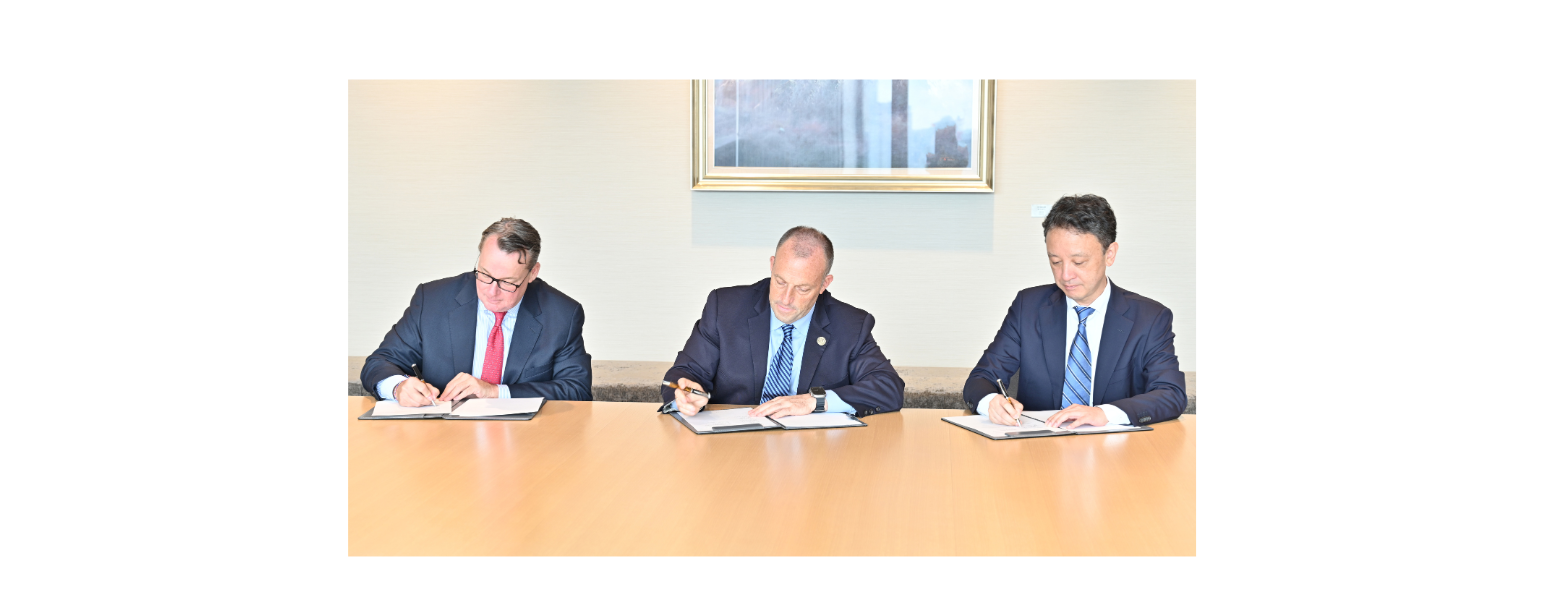
The SPA was signed on October 6, 2025, at JERA’s Tokyo headquarters by Governor Josh Green, and JERA Global CEO Yukio Kani, marking a new step in Hawai‘i–Japan collaboration on energy partnership and future-oriented development. The agreement establishes a framework for long-term collaboration among JERA Co., Inc., its U.S. subsidiary JERA Americas Inc., and the State of Hawai‘i focusing on fuel diversity and developing pathways toward decarbonization.

This partnership is designed to help realize the Hawai‘i State Energy Office’s Alternative Fuels, Repowering and Energy Transition Study, published in January 2025, which concluded in the short term that the state should accelerate its shift away from oil by using affordable and reliable alternative fuels, including natural gas. Governor Josh Green said,“The State of Hawai‘i is committed to achieving a cleaner, more sustainable energy future for our people. By collaborating with JERA—Japan’s largest power producer and a recognized global leader in energy transition—we are gaining access to valuable expertise and experience that will help accelerate our decarbonization journey while improving reliability and affordability for our residents.”

Yukio Kani, Global CEO of JERA Co., Inc., said,“JERA is honored to partner with the State of Hawai‘i in advancing its energy transition goals. As island communities, Japan and Hawai‘i share similar challenges and opportunities in pursuing affordability, stability, and sustainability. By working together, we aim to develop practical, innovative solutions that strengthen energy resilience and reduce costs for the people of Hawai‘i.”

JERA, brings extensive experience in the development and operation of large-scale, reliable energy infrastructure worldwide, with a growing focus on low carbon fuels, hydrogen, ammonia, and renewable energy integration. The company has committed to achieving net-zero CO₂ emissions from its domestic and international operations by 2050, as part of its mission to provide cutting edge solutions to the worlds’ energy challenges and ensure a sustainable and stable global energy supply.

About JERA

JERA is a global energy leader and Japan’s largest power generation company focused on providing cutting-edge solutions to the world’s energy issues. Established in 2015, the Company produces one-third of Japan’s electricity, and is one of the largest LNG buyers in the world. JERA has global reach and strength throughout the energy supply chain, from participation in LNG upstream projects and fuel procurement, through fuel transportation to power generation. In support of a responsible energy transition, JERA has committed to achieving net-zero CO₂ emissions from its domestic and overseas businesses by 2050.

GOVERNOR GREEN STRENGTHENS HAWAI‘I–JAPAN RELATIONS,SIGNS CLEAN ENERGY MEMORANDA

HONOLULU – Governor Josh Green today concluded a weeklong visit to Japan, where he and First Lady Jaime Kanani Green led a Hawai‘i delegation through Tokyo, Osaka and Okinawa, to strengthen partnerships in clean energy, business development, education and culture.

In Tokyo, Governor Green met with senior leaders from NEC Corporation, JERA Co. Inc. and the Yomiuri Shimbun Group, to explore opportunities in technology, energy and tourism. He also visited Expo 2025 Osaka, where Hawai‘i was recognized during a United States Pavilion event, hosted by Ambassador William E. Grayson, celebrating America’s 250th anniversary and the enduring friendship between Japan and the United States. Governor Green met with officials from Japan, France and the U.S. Pavillion, including U.S. Ambassador to Japan George Glass.

A Strategic Partnering Agreement signed by Governor Green on October 6 establishes a framework for collaboration among JERA Co., Inc., JERA Americas Inc. and the state of Hawaiʻi. The agreement will support the state’s decarbonization goals, advancing clean energy initiatives recommended in the Alternative Fuels, Repowering and Energy Transition study published by the Hawaiʻi State Energy Office in January 2025. 

JERA, the largest power producer in Japan and one of the largest power producers globally, has committed to eliminating carbon dioxide (CO2) emissions from domestic and international operations by 2050. JERA brings unparalleled expertise in energy infrastructure and strategic investment, in addition to its growing emphasis on low- and zero-carbon energy development. These efforts are part of Hawaiʻi’s strategy to diversify its energy portfolio.

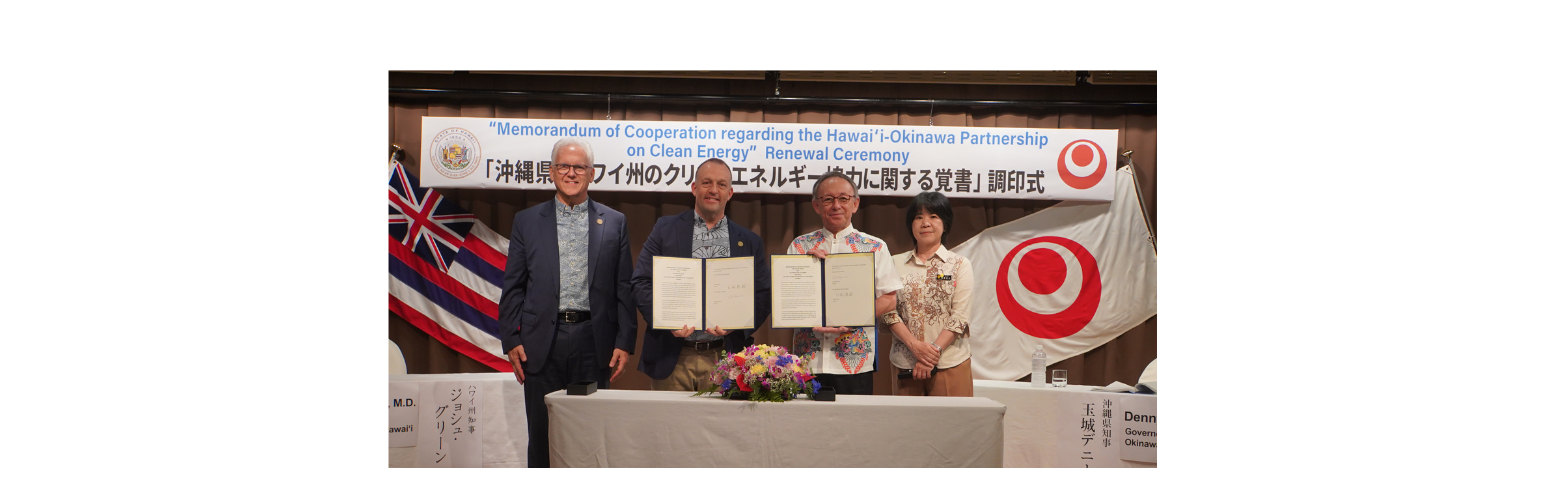
In Okinawa, Governor Green and Okinawa Governor Denny Tamaki signed a Five-Year Memorandum of Cooperation on Clean Energy, renewing a partnership that began in 2010 between the Hawai‘i State Energy Office and the Okinawa Prefectural Government. The agreement advances shared goals for renewable energy, clean transportation and grid innovation across island communities.

“Hawai‘i and Okinawa share more than history, we share purpose,” said Governor Green. “Together, we’re proving that island communities can lead the world in clean energy and resilience, while honoring the cultural ties that bind us.”

The visit also marked two major milestones: the 40th anniversary of the Hawai‘i–Okinawa sister-state relationship and the 125th anniversary of Okinawan immigration to Hawai‘i. These historic connections continue to shape the social, cultural and economic fabric of both island communities, deepening bonds built on shared values of aloha, family and perseverance.

Governor Green was joined by state legislators and business leaders, including Senate President Ronald Kouchi, Vice Speaker Linda Ichiyama, Senators Glenn Wakai, Chris Lee, and Michelle Kidani, Representatives Gregg Takayama, Dee Morikawa and Kyle Yamashita, as well as Department of Business, Economic Development and Tourism Director James Kunane Tokioka and Hawai‘i State Energy Office Director Mark Glick.

“Japan remains one of Hawai‘i’s most important partners — in energy, commerce, education and people-to-people exchange,” said Governor Green. “This mission reaffirms our shared commitment to innovation, sustainability and friendship that extends far beyond the Pacific.”

Governor Green will return to Honolulu on October 15 following a stop in San Francisco, where he will speak at the Salesforce Dreamforce Conference.

Photos, courtesy Office of the Governor, can be found here.


HAWAI‘I JOINS U.S. AFFORDABLE CLEAN CARS COALITION 

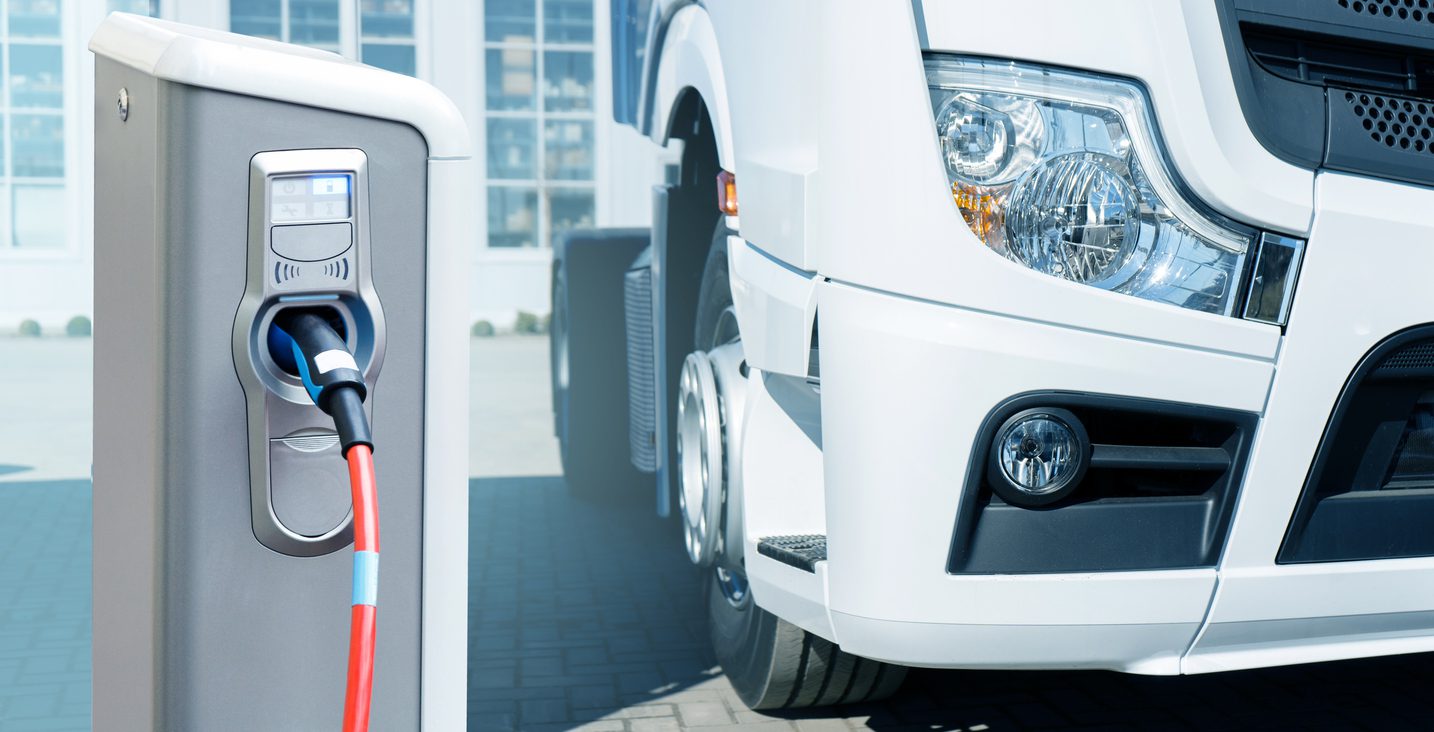
HONOLULU —The state of Hawaiʻi has joined the Affordable Clean Cars Coalition — a growing partnership among the states to help sustain America’s transition to cleaner and more affordable cars, support U.S. automotive manufacturers and workers, and safeguard states’ clean air authority.

Governor Green joined 12 other governors who launched the coalition earlier this year. “Hawaiʻi is committed to a clean energy future that protects the health of our people,” he said. “By investing in electrification, we can put more electric vehicles on the road and give our families more choices and lower costs, while safeguarding our communities from harmful pollution.”

The effort is one of several multistate partnerships hosted by the U.S. Climate Alliance, which launched a nationwide effort last month to encourage Americans to take advantage of federal clean energy incentives — including thousands of dollars in tax credits for EVs and EV charger installations — before they expire.

2024/2025 HAWAI‘I GREEN BUSINESS AWARDS PROGRAM HONORS HAWAI‘I BUSINESSES AND EVENTS FOR SUSTAINABILITY PRACTICES 

HONOLULU —The Hawai‘i Green Business Program (HGBP) recognized 45 Hawai‘i businesses and events today for their commitment to energy and water efficiency, waste reduction, pollution prevention and community involvement, as well as cultural and natural resource preservation. 

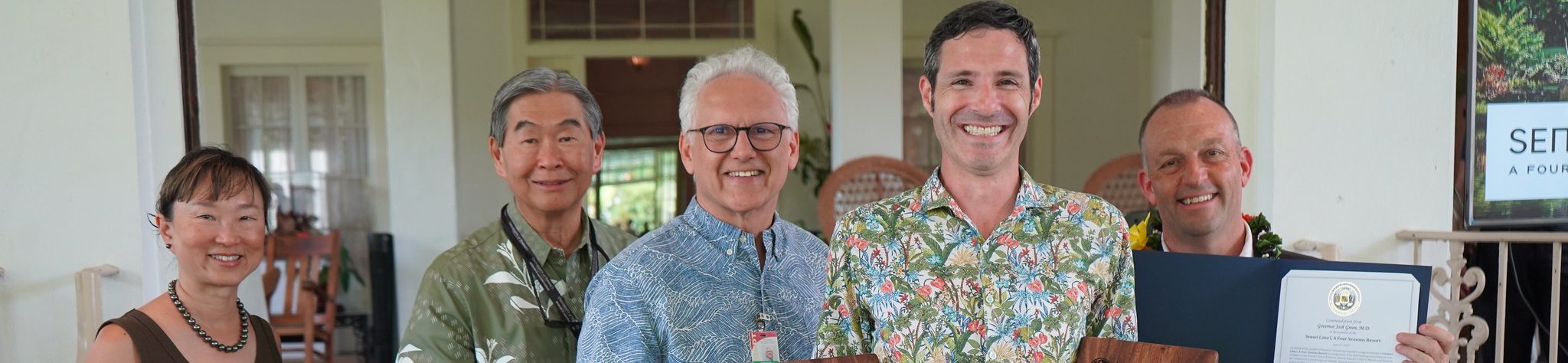
The 45 awardees representing six islands were recognized during the annual HGBP awards ceremony at historical Washington Place. Hosted by the Hawai‘i State Energy Office, the Honolulu Board of Water Supply and Hawaiʻi Energy, the awards program showcases the businesses advancing Hawaiʻi’s clean energy and sustainability goals, emphasizing energy efficiency as a key solution in accelerating Hawaiʻi’s move to renewable energy. 

Governor Josh Green, M.D., praised awardees for their commitment to sustain the ecological, cultural and economic health of Hawaiʻi, heralding lawmakers for the 2025 passage of the nation’s first climate impact fee to fund environmental stewardship and address the impacts of climate change. 

Green said, “At a time when environmental protections are being repealed at the federal level, Hawaiʻi will not forfeit its commitment to a more resilient, clean economy. The businesses and organizations we recognize today honor a statewide commitment to malama ʻāina — to steward our precious natural resources for future generations.”   

“Simply put,” said Hawai’i Chief Energy Officer Mark Glick, “using less energy means we need to generate less. These 45 businesses are among the best applying efficiency to our commercial building stock and energy efficient business practices make a profound difference.” 

Newly appointed state director of energy efficiency and renewable energy Monique Zanfes concluded, “Many of the businesses in this room rely on Hawai‘i’s natural resources not just for operations, but as the foundation of what draws people here. Protecting these resources isn’t just the right thing to do — it’s essential to the long-term viability and health of Hawai‘i. I thank them for leading by example.” 

The honorees of this year’s Hawai‘i Green Business Program Awards are:

Green Hotels, Resorts, Venue and Office Awardees:

  • Ala Moana Hotel by Mantra
  • Halekulani
  • Halepuna Waikiki
  • Hokulani, a Hilton Grand Vacations Club
  • The Kahala Hotel & Resort
  • Marriott’s Ko Olina Beach Club
  • Prince Waikiki
  • Kings’ Land, a Hilton Grand Vacations Club
  • Maui Bay Villas, a Hilton Grand Vacations Club
  • The Cliffs at Princeville
  • Four Seasons Resort O‘ahu at Ko Olina
  • Four Seasons Resort Maui at Wailea
  • Four Seasons Resort Lānaʻi
  • Sensei Lānaʻi, A Four Seasons Resort
  • Hawai‘i Convention Center
  • Waialae Country Club
  • Honeywell International/Smart Energy
  • Coradorables Sustainable Corporation

Green Event Awardees:

  • 2024 Hawai‘i Library Association/HASL HLA Conference
  • 2024 Sony Open
  • Artist Waltz
  • Green Business Engagement National Network – 7th National GBENN Summit
  • Sentry 2024 Golf Tournament of Champions / PGA Tour

Entry Level Program Awardees:

  • Coconut Ave
  • Drip Studio
  • The Fresh Shave
  • Hoku Foods Natural Market
  • Kilauea Bakery
  • Lady Elaine
  • Leong’s Road House
  • Little Plum
  • Uncle Paul’s Corner Store
  • Maui Juice Co.
  • Morning Glass Coffee
  • Pele’s Kitchen
  • Pu‘u O Hōkū Ranch
  • Sweet Cane Café
  • The Locavore Store
  • Oko‘a Farms Produce
  • Hanalei Spirits Distillery
  • Kaua‘i Island Brewing Co.
  • Kona Brewing Company
  • Lanikai Brewing Co.
  • Maui Brewing Company
  • Waikulu Distillery

For further information please visit Hawaii Green Business Program.

In one year, the energy efficiency measures of the above businesses resulted in 38.8 million gallons of water saved, 6.5 million kWh of electricity saved, 22.7 tons of green waste diverted, 12,372 tons of waste recycled,119,110 therms (1 therm = 100,000 BTUs) of gas saved, 6,725 metric tons of CO2 equivalent for electricity kWh reduced and 945 metric tons of CO2 equivalent for gas reduced. 

THE 2024/2025 Green Business Awards is livestreamed on the HSEO FB page at Hawaiʻi State Energy Office | Facebook  Press kits for 2024/2025 awardees can be found at Hawaiʻi Green Business Program. 

You can find the images by clicking here: 6.27.25 Hawaii Green Business Awards | Flickr

>